


Monday January 7th
The first day back at school and the beginning of a tremendous run of
creativity in my English books, starting with a recap of the holiday just gone
in Christmas 1979. The most notable event of the day, however (for me at
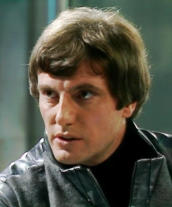
least), is the return of sci-fi classic Blake’s 7 to BBC 1. This show means a lot
to me - it’s just like Doctor Who but a little bit more grown up, with its later
time slot and more colourful moral palette. Even better, my parents like it, so
I don’t have to put up with my Dad slagging it off every five minutes.
In this third season, the show’s primary hero Roj Blake has disappeared after
an intergalactic battle, leaving the amoral embezzler Kerr Avon in charge of
the crew and rendering the show’s title slightly less descriptive of its
contents. “There’s no Blake and there aren’t seven of them” suddenly
becomes a mantra for hilarious breakfast DJs everywhere. The show also
threatens to attract the tagline “Dallas in Space” with its fancy clothes and
snoggy backstabbing. In tonight’s episode, Aftermath, our anti-hero Avon
finally gets to kiss his arch-enemy Servalan - before throttling her and
pushing her to the floor. (She also shoots a blind man in cold blood so she
probably deserves it.) This episode is also notable for introducing a black
female character (Dayna Mellanby, played by Josette Simon) to the principal
cast - rare on British TV at the time, even rarer in sci-fi. She spends the rest
of the series with nothing to do, but that’s British sci-fi for you.
Blake’s 7 is immediately preceded on BBC 2 by the first ever episode of
Training Dogs the Woodhouse Way. Barbara Woodhouse becomes a
household name pretty much overnight, launching a million playground
competitions to see who can say “Walkies!” in the bossiest voice.
Meanwhile in India, Indira Gandhi wins a general election, beginning her
second stint in office (her first lasted from 1967 to 1974). She will remain
India’s prime minister until her assassination in 1984.
Tuesday January 8th
Series 3 of Grange Hill begins at teatime on BBC 1, introducing a new batch
of first-year students which include Duane Orpington and Pogo Patterson -
the first sweeping cast changes since the show’s inception in 1978. Original
characters Tucker Jenkins, Alan Humphries and Trisha Yates remain a core
part of the show, but Benny Green only ever seems to appear on location.
Thursday January 10th
English: Great Space Battles
Star Wars Weekly No 99
Spectacular Spider-Man Weekly No 358
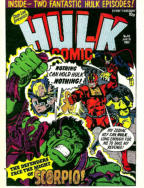
Hulk Comic No 46: the last issue to sport the title “Hulk Comic” before
changing its name to The Incredible Hulk Weekly from No 47 onwards. This
issue features a particularly informative instalment of Sez Dez (a semi-
regular column written by Marvel UK editor Dez Skinn) which outlines the
history of what the team are calling The Marvel Revolution. Apparently it
began with the creation of the monthly magazines Conan, Rampage and
Starburst in 1978, and is just about to enter Phase Eight.
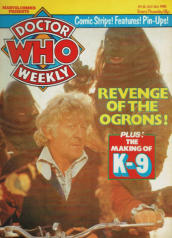
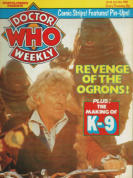
Doctor Who Weekly No 14: the letters page is overbrimming with praise for
the comic. I agree. At this point in time, it still excites me and I buy it eagerly
every week. My engagement isn’t total, however. I always write an entry for
the Crazy Caption Competition but never actually send one in. When I look at
this one, I can see why:
Monday January 7th - Sunday January 13th, 1980
TERM 2: Week 1

TERM 2 (Jan - Apr 1980)
New Year (Jan 1 - Jan 6, 1980)
Week 1 (Jan 7 - Jan 13, 1980)
Week 2 (Jan 14 - Jan 20, 1980)
Week 3 (Jan 21 - Jan 27, 1980)
Week 4 (Jan 28 - Feb 3, 1980)
Week 5 (Feb 4 - Feb 10, 1980)
Week 6 (Feb 11 - Feb 17, 1980)
Half Term (Feb 18 - Feb 24, 1980)
Week 7 (Feb 25 - Mar 2, 1980)
Week 8 (Mar 3 - Mar 9, 1980)
Week 9 (Mar 10 - Mar 16, 1980)
Week 10 (Mar 17 - Mar 23, 1980)
Week 11 (Mar 24 - Mar 30, 1980)
Easter 1 (Mar 31 - Apr 6, 1980)
Easter 2 (Apr 7 - Apr 13, 1980)
TERM 2 IN LINK FORM

TERM 1 (Sep - Dec 1979)
Look-in No 3: For once, Tom Baker wasn’t on the cover of Doctor Who
Weekly, but he did make the cover of Look-in, as part of the promotion for
the new series of The Book Tower (which started last Wednesday). There’s
also an article about The Selecter, and a competition to win a Paper Mate
Replay pen - biro you can rub out! A novelty at the time. I remember being
super-excited about these, until I actually got one.
BBC 1, 7.20 pm: Top of the Pops - presented by Kid Jensen, with music from
these guys:
•
Young Blood UFO
•
It’s Different for Girls Joe Jackson
•
Working for the Yankee Dollar Skids
•
I’m in the Mood for Dancing The Nolans
Friday January 11th
Nigel Short, 14, becomes the youngest ever chess player to be awarded
International Master status. I remember a brief period when my parents
(Dad especially) encouraged me to take up chess on the back of this -
probably a case of “You’re brainy and you’ve got blonde hair, you could be
the next Nigel Short if you want.” I did at least attempt to learn the rules. But
like all these difficult things, I played it twice, then got bored and went back
to my Star Wars figures.
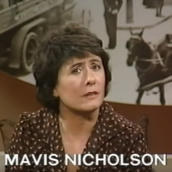
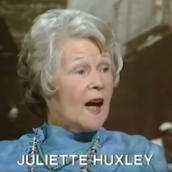
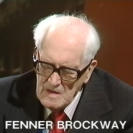
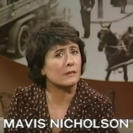
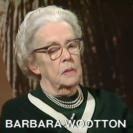
Afternoon Plus: Victorians - with Mavis Nicholson, and four people who were
born when Queen Victoria was still alive.
BBC 1, 5.15 pm: Grange Hill: Series 3 Episode 2 - featuring some pretty
useless child safeguarding. The teachers see Duane with a black eye, find out
his Dad gave it to him and proceed to treat him like he obviously must have
deserved it. Welcome to 1980, kids.
BBC 2, 6.25 pm: Monkey - Even Monsters Can Be People
Saturday January 12th
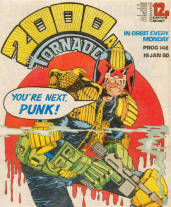
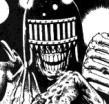
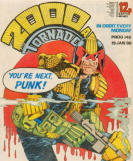
2000 AD Prog 148 sports a classic cover illustration of Judge Dredd saying,
“You’re next, punk!” - How thrilling! He’s just killed someone else and now
he’s going to kill ME!!
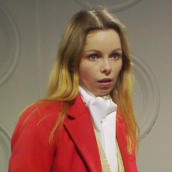
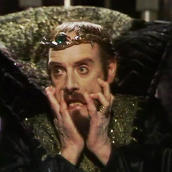
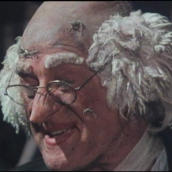
Doctor Who: The Horns of Nimon - Part Four - the final episode of Season
17, and the end of my childhood love affair with Doctor Who.
Let me be absolutely clear about this. For most of my childhood until this
point, Doctor Who had been my favourite thing. Ever since I’d first laid eyes
on it way back in 1974, I’d been madly in love with it. It’s difficult to define
exactly what it was about the show that made it so exciting, but the
emotions I felt while watching it were so heightened - there was such a rush
of adrenaline whenever that theme tune played. The costumes, the sets, the
lighting, the sounds it made, the ideas it played with - it just wasn’t like
anything else. I bought the books, I listened to the records, and now I read
the comics.
Lately though (I’m talking 1978-79), my enthusiasm had been waning. Partly
because Star Wars had proven other things could be just as exciting. Partly
because the show just hadn’t been quite as emotionally arresting since Mary
Whitehouse had persuaded the BBC to chop its balls off. But mainly - as my
Dad was fond of telling me - because I was eight now, and Doctor Who was
for tiny little kids. The other kids at school weren’t really into it. Everybody
liked Blake’s 7 - that was proper sci-fi for grown-ups - but Doctor Who wasn’t
that interesting to anyone else around me.
Occasionally, I’d still love it. It was good to see the Daleks back, even if they
weren’t as cool as I remembered. City of Death was great. And even though
the Mandrels were rubbish, some of the ideas in Nightmare of Eden had
been secretly very exciting. But more often than not, it was just a bit dull. I
wasn’t enjoying the latest one much. But that was OK - it was only January. I
knew how long these seasons lasted. This was the fifth story of the latest
series, and ever since I’d been paying attention, there had always been six.
Five stories of four parts each, followed by a final, season-busting six-parter
that might very well be the best of the lot.
You see, I still had hope. Hope that the next one would switch it all around.
The latest one was only bad because they were saving all their best ideas for
last. So it felt like a kick in the throat when the announcer - a little too
enthusiastically for my liking - told us that this was the last in the series and
the show would return in the autumn.
I don’t remember saying or doing anything about it. Just a second or two of
genuine surprise, then a quiet acceptance as a little piece of my childhood
died. I felt betrayed - I didn’t understand why they’d done it this way - but I
had to accept it wasn’t coming back. The announcer had said so. And
besides, it was rubbish anyway, wasn’t it? It was rubbish.
It took at least a year before I learned there was supposed to have been
another story at the end - a six-parter written by Douglas Adams called
Shada, set partly in Cambridge and partly on an ancient Time Lord prison
planet. It would have been right up my street. They’d even filmed half of it,
but a strike at the BBC meant the studios had to be reallocated to other
programmes and it just wasn’t economically viable to finish it.
Of course, now (I’m talking 2021, while writing this), they have actually
finished it, with the aid of animation, and you can buy it in a massive blu-ray
set with all the others from Season 17, to watch whenever you like. Or
maybe you could just watch it here, along with almost every other episode of
Doctor Who ever made. But none of that helps the eight-year-old me, stuck
on the slow path in 1980.
I’ve no idea what difference it would have made if they’d actually shown it
back then. Probably none. Maybe I’d have written about Doctor Who in my
English books instead of Blake’s 7 and 2000 AD. But I doubt it. I was already
well on the road to growing up, and leaving silly, childish Doctor Who behind.
I carried on buying the comic for a few more weeks, but before long even
that bit the dust. Doctor Who was just a daft, cheap-looking children’s show.
Blake’s 7 now took its place as my official favourite TV programme.
Sunday January 13th
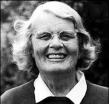
HGV driver Peter Sutcliffe is interviewed by police at his home in Bradford, in
connection with the Yorkshire Ripper murders. It’s the seventh time he’s
been questioned in just over two years - mainly because of a £5 note that
had been left at the scene of one of the crimes, the serial number of which
has been traced to the pay packets of the company he works for. His car has
been spotted recurrently in red light areas. He looks exactly like the guy in
the photofits provided by the victims who survived his attacks. He can’t
provide an albi for the night of Barbara Leach’s murder last September. But
thanks to an archaic filing system, the officers in charge of the investigation
are unaware of all these bits of evidence. Despite searching his house and
examining his boots, they are unable to piece everything together and, for
the time being, they let him go. Sutcliffe will be interviewed again on January
30 and February 7.
BBC 1, 4.30pm: Heat 1 of the Young Scientists of the Year competition, 1980.
I was a nerd - I wonder if I thought that might be me one day? Not likely if
this is anything to go by.
Worzel Gummidge: Worzel’s Nephew
UK SINGLES CHART
No 1: Brass in Pocket Pretenders
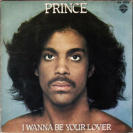
No 44: I Wanna Be Your Lover Prince
No 52: Living By Numbers New Musik
No 53: Strange Little Girl Sad Cafe
No 60: Dance Stance Dexy’s Midnight Runners
UK ALBUMS CHART
No 1: Pretenders Pretenders
No 50: End of the Century The Ramones
No 75: Joe’s Garage, Acts 2 & 3 Frank Zappa













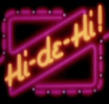
Hi-de-Hi!
Jan 1, 1980


St Pauls Riots
Apr 2, 1980

My Girl
Madness



Atomic
Blondie


Underpass
John Foxx
Judge Death
Jan 19, 1980


TERM 3 (Apr - Jul 1980)


- ENGLISH
- ENGLISH 1
- English 1: Overview
- Clarke Hall
- Old Houses
- Fairburn v Burton Salmon
- The Forgotten World
- String Orchestra
- Sheet Lightning
- Grezelda the Witch
- Bonfire Night
- Metropolitan Police
- Christmas 1979
- Great Space Battles
- Luddenden
- The Hat's Adventure
- Sleeping Beauty
- What I Do On Monday
- Waen Shepherd 2
- Waen Shepherd in: Green Squids
- Ward's 7: Move of the Galaxy
- Ward's 7: Alpha Centauri
- Ward's 7: Escape to Mother Ship
- Ward's 7: Death Planet
- Blake's 7
- Ward's 7: The Hunt
- The Flame in the Desert
- The Fugitive
- British Skiing Events
- Ward's 7: Rescue
- Fiends of the Eastern Front
- Black Hawk Profile
- Apeth
- Tedosaurus
- A Walk in Our Village
- The Mountain Called Tyrannosaurus Rex
- Florence Nightingale
- War of the Worlds
- The Micronauts: Supersilver
- ENGLISH 2


- TOPIC
- TOPIC 1
- TOPIC 2
- Topic 2: Overview
- Dinosaurs 1
- Space Travel
- Ships
- Sport
- Dinosaurs 2
- Judge Dredd: The Blood of Satanus
- Captain Carnivore
- A-Maze-ing!
- Star Poster: Super Jesus
- The Micronauts: Giant Karza
- The Origin of Electro
- Optical Illusion Time
- Frantic Thingies
- Men in Space
- Topic Book Word Find
- Puzzleman
- Evel Knievel: Fury Falls
- More Puzzlers
- Star Poster: The Hulk (1)
- Grobschnitt's Page
- Captain Starlight
- Star Poster: The Hulk (2)
- The Yellyog Gang
- The Adventures of Puzzlemaster
- Jupe
- Woman Line
- Pin-Up: Doctor Doom
- Lazer Lash
- The Human Maze
- Three Squares
- Raven Mad
- Marvel Sketches
- Robschnitt's Age: 1
- Snotty Notty


- AND THE REST: An overview
- ODDS & ENDS
- HISTORY 1
- History 1: Overview
- People in the Old Stone Age 1
- Guy Fawkes
- People in the Old Stone Age 2
- People in the Old Stone Age 3
- The New Stone Age
- People of the Bronze Age
- The Story of Nelson 1
- The Story of Nelson 2
- The Story of Nelson 3
- Florence Nightingale
- The Story of Nelson 4
- The Story of Nelson 5
- The Story of Nelson 6
- The Story of Nelson 7
- SCIENCE 1
- GEOGRAPHY 1
- BIOGRAPHICAL NOTES


TERM 2: Week 1
Monday January 7th -
Sunday January 13th, 1980











Top of the Pops - presented
by Kid Jensen, with music
from these guys:
•
Young Blood UFO
•
It’s Different for Girls Joe
Jackson
•
Working for the Yankee
Dollar Skids
•
I’m in the Mood for
Dancing The Nolans
Friday January 11th
Nigel Short, 14, becomes the
youngest ever chess player to
be awarded International
Master status. I remember a
brief period when my parents
(Dad especially) encouraged
me to take up chess on the
back of this - probably a case
of “You’re brainy and you’ve
got blonde hair, you could be
the next Nigel Short if you
want.” I did at least attempt
to learn the rules. But like all
these difficult things, I played
it about three times, then got
bored and went back to my
Star Wars figures.
Afternoon Plus: Victorians -
with Mavis Nicholson, and
four people who were born
when Queen Victoria was still
alive.
Grange Hill: Series 3 Episode
2 - featuring some pretty
useless child safeguarding.
The teachers see Duane with
a black eye, find out his Dad
gave it to him and proceed to
treat him like he obviously
must have deserved it.
Welcome to 1980, kids.
Sunday January 13th
HGV driver Peter Sutcliffe is interviewed by police at
his home in Bradford, in connection with the
Yorkshire Ripper murders. It’s the seventh time he’s
been questioned in just over two years - mainly
because of a £5 note that had been left at the scene
of one of the crimes, the serial number of which has
been traced to the pay packets of the company he
works for. His car has been spotted recurrently in red
light areas. He looks exactly like the guy in the
photofits provided by the victims who survived his
attacks. He can’t provide an albi for the night of
Barbara Leach’s murder last September. But thanks
to an archaic filing system, the officers in charge of
the investigation are unaware of all these bits of
evidence. Despite searching his house and examining
his boots, they are unable to piece everything
together and, for the time being, they let him go.
Sutcliffe will be interviewed again on January 30 and
February 7.
BBC 1, 4.30pm: Heat 1 of the Young Scientists of the
Year competition, 1980. I was a nerd - I wonder if I
thought that might be me one day? Not likely if this is
anything to go by.
Worzel Gummidge: Worzel’s Nephew
UK SINGLES CHART
No 1: Brass in Pocket Pretenders
No 44: I Wanna Be Your Lover Prince
No 52: Living By Numbers New Musik
No 53: Strange Little Girl Sad Cafe
No 60: Dance Stance Dexy’s Midnight Runners
UK ALBUMS CHART
No 1: Pretenders Pretenders
No 50: End of the Century The Ramones
No 75: Joe’s Garage, Acts 2 & 3 Frank Zappa
Of course, now (I’m talking 2021, while writing this),
they have actually finished it, with the aid of
animation, and you can buy it in a massive blu-ray
set with all the others from Season 17, to watch
whenever you like. Or maybe you could just watch it
here, along with almost every other episode of
Doctor Who ever made. But none of that helps the
eight-year-old me, stuck on the slow path in 1980.
I’ve no idea what difference it would have made if
they’d actually shown it back then. Probably none.
Maybe I’d have written about Doctor Who in my
English books instead of Blake’s 7 and 2000 AD. But I
doubt it. I was already well on the road to growing
up, and leaving silly, childish Doctor Who behind.
I carried on buying the comic for a few more weeks,
but before long even that bit the dust. Doctor Who
was just a daft, cheap-looking children’s show.
Blake’s 7 now took its place as my official favourite
TV programme.
Saturday January 12th
2000 AD Prog 148 sports a
classic cover illustration of
Judge Dredd saying, “You’re
next, punk!” - How thrilling!
He’s just killed someone else
and now he’s going to kill ME!!
Doctor Who: The Horns of
Nimon - Part Four - the final
episode of Season 17, and the
end of my childhood love
affair with Doctor Who.
Let me be absolutely clear
about this. For most of my
childhood until this point,
Doctor Who had been my
favourite thing. Ever since I’d
first laid eyes on it way back
in 1974, I’d been madly in love
with it. It’s difficult to define
exactly what it was about the
show that made it so exciting,
but the emotions I felt while
watching it were so
heightened - there was such a
rush of adrenaline whenever
that theme tune played. The
costumes, the sets, the
lighting, the sounds it made,
the ideas it played with - it
just wasn’t like anything else. I
bought the books, I listened
to the records, and now I read
the comics.
Lately though (I’m talking
1978-79), my enthusiasm had
been waning. Partly because
Star Wars had proven other
things could be just as
exciting. Partly because the
show just hadn’t been quite
as emotionally arresting since
Mary Whitehouse had
persuaded the BBC to chop
its balls off. But mainly - as
my Dad was fond of telling
me - because I was eight now,
and Doctor Who was for tiny
little kids. The other kids at
school weren’t really into it.
Everybody liked Blake’s 7 -
that was proper sci-fi for
grown-ups - but Doctor Who
wasn’t that interesting to
anyone else around me.
I don’t remember saying or doing anything about it.
Just a second or two of genuine surprise, then a
quiet acceptance as a little piece of my childhood
died. I felt betrayed - I didn’t understand why they’d
done it this way - but I had to accept it wasn’t
coming back. The announcer had said so. And
besides, it was rubbish anyway, wasn’t it? It was
rubbish.
It took at least a year before I learned there was
supposed to have been another story at the end - a
six-parter written by Douglas Adams called Shada,
set partly in Cambridge and partly on an ancient
Time Lord prison planet. It would have been right
up my street. They’d even filmed half of it, but a
strike at the BBC meant the studios had to be
reallocated to other programmes and it just wasn’t
economically viable to finish it.
Monday January 7th
The first day back at school
and the beginning of a
tremendous run of creativity
in my English books, starting
with a recap of the holiday
just gone in Christmas 1979.
The most notable event of
the day, however (for me at
least), is the return of sci-fi
classic Blake’s 7 to BBC 1.
This show means a lot to me
- it’s just like Doctor Who but
a little bit more grown up,
with its later time slot and
more colourful moral palette.
Even better, my parents like
it, so I don’t have to put up
with my Dad slagging it off
every five minutes.
In this third season, the
show’s primary hero Roj
Blake has disappeared after
an intergalactic battle, leaving
the amoral embezzler Kerr
Avon in charge of the crew
and rendering the show’s title
slightly less descriptive of its
contents. “There’s no Blake
and there aren’t seven of
them” suddenly becomes a
mantra for hilarious
breakfast DJs everywhere.
The show also threatens to
attract the tagline “Dallas in
Space” with its fancy clothes
and snoggy backstabbing. In
tonight’s episode, Aftermath,
our anti-hero Avon finally
gets to kiss his arch-enemy
Servalan - before throttling
her and pushing her to the
floor. (She also shoots a blind
man in cold blood so she
probably deserves it.) This
episode is also notable for
introducing a black female
character (Dayna Mellanby,
played by Josette Simon) to
the principal cast - rare on
British TV at the time, even
rarer in sci-fi. She spends
most of the rest of the series
with nothing to do, but that’s
sci-fi for you.
Blake’s 7 is immediately preceded on BBC 2 by the
first ever episode of Training Dogs the Woodhouse
Way. Barbara Woodhouse becomes a household
name pretty much overnight, launching a million
playground competitions to see who can say “Sit!” in
the bossiest way.
Meanwhile in India, Indira Gandhi wins a general
election, beginning her second stint in office (her
first lasted from 1967 to 1974). She will remain
India’s prime minister until her assassination in
1984.
Tuesday January 8th
Series 3 of Grange Hill begins at teatime on BBC 1,
introducing a new batch of first-year students which
include Duane Orpington and Pogo Patterson - the
first sweeping cast changes since the show’s
inception in 1978. Original characters Tucker Jenkins,
Alan Humphries and Trisha Yates remain a core part
of the show, but Benny Green only ever seems to
appear on location.
Thursday January 10th
English: Great Space Battles
Doctor Who Weekly No 14: the letters page is
overbrimming with praise for the comic. I agree. At
this point in time, it still excites me and I buy it
eagerly every week. My engagement isn’t total,
however. I always write an entry for the Crazy
Caption Competition but never actually send one in.
When I look at this one, I can see why:



Occasionally, I’d still love it. It was good to see the
Daleks back, even if they weren’t as cool as I
remembered. City of Death was great. And even
though the Mandrels were rubbish, some of the
ideas in Nightmare of Eden had been secretly very
exciting. But more often than not, it was just a bit
dull. I wasn’t enjoying the latest one much. But that
was OK - it was only January. I knew how long these
seasons lasted. This was the fifth story of the latest
series, and ever since I’d been paying attention,
there had always been six. Five stories of four parts
each, followed by a final, season-busting six-parter
that might very well be the best of the lot.
You see, I still had hope. Hope that the next one
would switch it all around. The latest one was only
bad because they were saving all their best ideas
for last. So it felt like a kick in the throat when the
announcer - a little too enthusiastically for my liking
- told us that this was the last in the series and the
show would return in the autumn.
Hi-de-Hi!
Jan 1, 1980
Steel Strike
Jan 2, 1980
My Girl
Madness
Underpass
John Foxx
Atomic
Blondie
TERM 2 IN LINK FORM

Star Wars Weekly No 99
Spectacular Spider-Man Weekly No 358
Hulk Comic No 46: the last issue to sport the title
“Hulk Comic” before changing its name to The
Incredible Hulk Weekly from No 47 onwards. This
issue features a particularly informative instalment of
Sez Dez (a semi-regular column written by Marvel UK
editor Dez Skinn) which outlines the history of what
the team are calling The Marvel Revolution.
Apparently it began with the creation of the monthly
magazines Conan, Rampage and Starburst in 1978,
and is just about to enter Phase Eight.
Look-in No 3: For once, Tom Baker wasn’t on the cover
of Doctor Who Weekly, but he did make the cover of
Look-in, as part of the promotion for the new series of
The Book Tower (which started last Wednesday).
There’s also an article about The Selecter, and a
competition to win a Paper Mate Replay pen - biro you
can rub out! A novelty at the time. I remember being
super-excited about these, until I actually got one.




- ENGLISH
- ENGLISH 1
- English 1: Overview
- Clarke Hall
- Old Houses
- Fairburn v Burton Salmon
- The Forgotten World
- String Orchestra
- Sheet Lightning
- Grezelda the Witch
- Bonfire Night
- Metropolitan Police
- Christmas 1979
- Great Space Battles
- Luddenden
- The Hat's Adventure
- Sleeping Beauty
- What I Do On Monday
- Waen Shepherd 2
- Waen Shepherd in: Green Squids
- Ward's 7: Move of the Galaxy
- Ward's 7: Alpha Centauri
- Ward's 7: Escape to Mother Ship
- Ward's 7: Death Planet
- Blake's 7
- Ward's 7: The Hunt
- The Flame in the Desert
- The Fugitive
- British Skiing Events
- Ward's 7: Rescue
- Fiends of the Eastern Front
- Black Hawk Profile
- Apeth
- Tedosaurus
- A Walk in Our Village
- The Mountain Called Tyrannosaurus Rex
- Florence Nightingale
- War of the Worlds
- The Micronauts: Supersilver
- ENGLISH 2


- TOPIC
- TOPIC 1
- TOPIC 2
- Topic 2: Overview
- Dinosaurs 1
- Space Travel
- Ships
- Sport
- Dinosaurs 2
- Judge Dredd: The Blood of Satanus
- Captain Carnivore
- A-Maze-ing!
- Star Poster: Super Jesus
- The Micronauts: Giant Karza
- The Origin of Electro
- Optical Illusion Time
- Frantic Thingies
- Men in Space
- Topic Book Word Find
- Puzzleman
- Evel Knievel: Fury Falls
- More Puzzlers
- Star Poster: The Hulk (1)
- Grobschnitt's Page
- Captain Starlight
- Star Poster: The Hulk (2)
- The Yellyog Gang
- The Adventures of Puzzlemaster
- Jupe
- Woman Line
- Pin-Up: Doctor Doom
- Lazer Lash
- The Human Maze
- Three Squares
- Raven Mad
- Marvel Sketches
- Robschnitt's Age: 1
- Snotty Notty


- AND THE REST: An overview
- ODDS & ENDS
- HISTORY 1
- History 1: Overview
- People in the Old Stone Age 1
- Guy Fawkes
- People in the Old Stone Age 2
- People in the Old Stone Age 3
- The New Stone Age
- People of the Bronze Age
- The Story of Nelson 1
- The Story of Nelson 2
- The Story of Nelson 3
- Florence Nightingale
- The Story of Nelson 4
- The Story of Nelson 5
- The Story of Nelson 6
- The Story of Nelson 7
- SCIENCE 1
- GEOGRAPHY 1
- BIOGRAPHICAL NOTES