

I once met a man who played me a tape of his teenage son’s thrash metal band. They were
very impressive and I told him so. He said they were going to be huge, and went on to
explain that he had always known his son was destined to do great things, that he’d always
been creative and clever and very advanced for his years.
His wife chipped in: “He knew the names of all the dinosaurs.” Her husband sagely nodded.
I told them that’s exactly what my Auntie Mavis used to say about me, and they just stared at
me blankly. I’m not sure whether they were staring in sheer amazement at how big-headed I
was being, or staring at my chubby, balding face and my shabby, tobacco-stained jacket and
seeing their son’s life flash before their eyes, in a shocking realisation that perhaps their son
wouldn’t be a huge star at all and instead he’d turn out just like me.
I don’t know what it is about dinosaur-naming that makes adults go all starry-eyed. Maybe
it’s the long words. Maybe it’s the Latin. Maybe at the age of seven you’re still supposed to be
struggling with Janet and John, and not be able to pronounce long Latin words, or
understand the concept of evolution. But whatever it is, I could definitely name dinosaurs
when I was seven years old, and people did indeed take it as some kind of sign that I was
some kind of genius who was destined to be a great man. I just thought it was all a bit
normal really. I mean, they’re just words, aren’t they? Though I was obviously excited about
dinosaurs – and the more I think about it, I suppose it is a tiny bit impressive that I could
spell such long words at that age – at the time, I found it much more impressive that I drew
my own terrible comic strips, invented my own useless comedy characters and did
horrifically bad impressions of Prince Charles.
Mr Geraghty knew I was clever when I arrived at Fairburn School. I remember him telling me
so. Or rather, he told me that he’d bumped into Mr Jarvis, the kind, bearded deputy head of
my infants school in Airedale, who had told him I was an especially gifted student and that
he should watch me carefully. I don’t know how Mr Jarvis knew this – maybe he’d spotted me
naming dinosaurs and suddenly realised I was destined for greatness.
Whatever. The other reason I know Mr Geraghty had prior knowledge of my cleverness was
because he put me on the wrong table.
Fairburn is small. Tiny. Minuscule. Microscopic. Though it seemed big enough when I lived
there, I recently walked round it and it took about ten minutes. And being so small meant it
really didn’t have many kids. The local school was a daytime home to about forty pupils,
covering the first seven school years only, from the ages of 4 to 11. In modern educational
parlance, these would be called Reception and Years 1 to 6. In the language of the seventies,
they were first to third year infants and first to fourth year juniors. Having spent my first
three school years at Redhill Infants School in Airedale, I was a first year junior.
Fairburn School was, and presumably still is, split into two classrooms. Miss Cunniff taught
the infants in one room. Mr Geraghty taught the juniors in another. Four years in one class,
each with their own table.
I knew which year I was in. I knew how old I was and how many years I’d been at school. So it
was quite a surprise when, after returning from my disastrous morning at the swimming
baths, I was told to sit at the second year table. I now realise this was an attempt to move
me up a year and hasten my education, but on the day, it made as much sense to me as
swimming did and I protested quite vocally, saying that Mr Geraghty had made a mistake
and that I should be on the first year table. Mr Geraghty quite rightly told me to shut up and
that I should just “sit there for now”.
I didn’t stay in the second year for long. Maybe a week, maybe an hour, I don’t recall. But
eventually I was moved to the first year table where I belonged. It may have had something
to do with the fact that, even though my reading and writing skills were slightly above
average, the second year Maths stuff was way too advanced for me. I don’t think I was bad at
it - I just hadn’t been taught the first year stuff, which put me at a serious disadvantage. But
my protestations about being in the wrong year had also made the other kids suspicious,
and more than anything, the need for me to fit in was probably the over-riding factor. So to
my relief, I was moved back down to the first year where I belonged.
In the long term, this was probably a good thing. It meant that I’d already spent a bit of time
getting to know the second years before I got to know the kids my own age, so ultimately I
got to know everyone quicker and, first impressions tending to count, the second years
remained my equals rather than my elders throughout my time in Fairburn. But in the short
term, it was unsettling, and I wasn’t really quite sure what was going on.
The earliest recorded date in any of my Fairburn books is on the first page of Topic 1, so I
have to assume that this is where my work begins, on September 14th, 1979 (a Friday), with
a picture of a brachiosaurus and some stuff about the word “dinousaur” meaning “terrible
lizzard” (sic). Far be it from me to knock a seven year old child for not being able to spell
properly, but this is where the dinosaur-naming/child genius dynamic falls apart. You see, it’s
all very well to be able to spell the names of dinosaurs when you’re copying them out of a
book, but being able to spell Parasaurolophus when I couldn’t even spell lizard doesn’t strike
me as being particularly clever.
And that’s what Topic 1 is. Copied. From the Ladybird Book of Dinosaurs, by the look of it.
That’s what we were supposed to do in Topic lessons. Each child chose a book from the shelf
– one we weren’t covering in other lessons like History or Geography – and then slavishly
copied the text and pictures into another book.
I’m not sure copying works as a way of learning things. I look back at this and the many other
exercise books I’ve kept, full of things I’ve copied from other books, and I can hardly
remember a thing about it. Ask me a year ago what an ornitholestes was and I would have
guessed it was something to do with birds, but I wouldn’t have known I’d written about it in
an exercise book when I was seven years old. Same with the History book I kept – a year and
a half spent writing about Napoleon and if you were to ask me what I know about him now,
I’d say virtually nothing. Surely it’s better to get actively involved with the subject and answer
questions about it, to understand it, rather than just copying it all out of a book.
Then again, we also did some science experiments around the same time, which it seems we
actively got involved in as a whole class, and I remember even less about them, so maybe I
don’t really know what I’m talking about.
The basic fact I want to remember though is, a class made up of four different age groups
can’t be as easy to teach as a class with just one. Everyone’s at a different stage of
development. How do you ensure that everyone isn’t just copying the same thing over and
over again? I suppose one way is to give them the means to teach themselves, by just
copying something once, then moving on and copying something else. It isn’t ideal, but at
least there’s a possibility someone might learn something, no matter how remote.
The Mystery of the Source Material
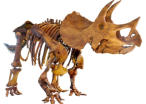
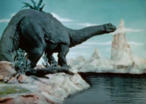
For most of my life, I assumed the stuff in this book was copied from the Ladybird Book of
Dinosaurs. So finally, in May 2021, I decided to check and see if I was right. I found what I
thought must be the original on ebay for about £3. It looked about right. Took one look at
the cover and recognised it instantly. Published in 1974, so it was about the right time. Quite
bewildering when it arrived to find out it wasn’t the right one. The book seemed familiar. The
pictures all struck a chord, so I’d obviously spent some time with that book at some point in
the past. But they weren’t the ones I’d copied into Topic 1. Nor the words. So I’m none the
wiser.
Do you know which book I copied?
If you do, please get in touch on waen@waenshepherd.com - you’d make a self-obsessed
middle-aged man very happy.
September - December 1979
Topic 1


HISTORY 1
Sept 1979 - Oct 1981

SCIENCE 1
Sept 1979 - Apr 1980
GEOGRAPHY 1
Sept 1979 - Feb 1981



DINO LINKS







WHICH BOOK DID I COPY?

(IT WASN’T THIS ONE)


- ENGLISH
- ENGLISH 1
- English 1: Overview
- Clarke Hall
- Old Houses
- Fairburn v Burton Salmon
- The Forgotten World
- String Orchestra
- Sheet Lightning
- Grezelda the Witch
- Bonfire Night
- Metropolitan Police
- Christmas 1979
- Great Space Battles
- Luddenden
- The Hat's Adventure
- Sleeping Beauty
- What I Do On Monday
- Waen Shepherd 2
- Waen Shepherd in: Green Squids
- Ward's 7: Move of the Galaxy
- Ward's 7: Alpha Centauri
- Ward's 7: Escape to Mother Ship
- Ward's 7: Death Planet
- Blake's 7
- Ward's 7: The Hunt
- The Flame in the Desert
- The Fugitive
- British Skiing Events
- Ward's 7: Rescue
- Fiends of the Eastern Front
- Black Hawk Profile
- Apeth
- Tedosaurus
- A Walk in Our Village
- The Mountain Called Tyrannosaurus Rex
- Florence Nightingale
- War of the Worlds
- The Micronauts: Supersilver
- ENGLISH 2


- TOPIC
- TOPIC 1
- TOPIC 2
- Topic 2: Overview
- Dinosaurs 1
- Space Travel
- Ships
- Sport
- Dinosaurs 2
- Judge Dredd: The Blood of Satanus
- Captain Carnivore
- A-Maze-ing!
- Star Poster: Super Jesus
- The Micronauts: Giant Karza
- The Origin of Electro
- Optical Illusion Time
- Frantic Thingies
- Men in Space
- Topic Book Word Find
- Puzzleman
- Evel Knievel: Fury Falls
- More Puzzlers
- Star Poster: The Hulk (1)
- Grobschnitt's Page
- Captain Starlight
- Star Poster: The Hulk (2)
- The Yellyog Gang
- The Adventures of Puzzlemaster
- Jupe
- Woman Line
- Pin-Up: Doctor Doom
- Lazer Lash
- The Human Maze
- Three Squares
- Raven Mad
- Marvel Sketches
- Robschnitt's Age: 1
- Snotty Notty


- AND THE REST: An overview
- ODDS & ENDS
- HISTORY 1
- History 1: Overview
- People in the Old Stone Age 1
- Guy Fawkes
- People in the Old Stone Age 2
- People in the Old Stone Age 3
- The New Stone Age
- People of the Bronze Age
- The Story of Nelson 1
- The Story of Nelson 2
- The Story of Nelson 3
- Florence Nightingale
- The Story of Nelson 4
- The Story of Nelson 5
- The Story of Nelson 6
- The Story of Nelson 7
- SCIENCE 1
- GEOGRAPHY 1
- BIOGRAPHICAL NOTES


I once met a man who played me a tape of his
teenage son’s thrash metal band. They were very
impressive and I told him so. He said they were
going to be huge, and went on to explain that he
had always known his son was destined to do great
things, that he’d always been creative and clever
and very advanced for his years.
His wife chipped in: “He knew the names of all the
dinosaurs.” Her husband sagely nodded.
I told them that’s exactly what my Auntie Mavis
used to say about me, and they just stared at me
blankly. I’m not sure whether they were staring in
sheer amazement at how big-headed I was being,
or staring at my chubby, balding face and my
shabby, tobacco-stained jacket and seeing their
son’s life flash before their eyes, in a shocking
realisation that perhaps their son wouldn’t be a
huge star at all and instead he’d turn out just like
me.
I don’t know what it is about dinosaur-naming that
makes adults go all starry-eyed. Maybe it’s the long
words. Maybe it’s the Latin. Maybe at the age of
seven you’re still supposed to be struggling with
Janet and John, and not be able to pronounce long
Latin words, or understand the concept of
evolution. But whatever it is, I could definitely name
dinosaurs when I was seven years old, and people
did indeed take it as some kind of sign that I was
some kind of genius who was destined to be a great
man. I just thought it was all a bit normal really. I
mean, they’re just words, aren’t they? Though I was
obviously excited about dinosaurs – and the more I
think about it, I suppose it is a tiny bit impressive
that I could spell such long words at that age – at
the time, I found it much more impressive that I
drew my own terrible comic strips, invented my own
useless comedy characters and did horrifically bad
impressions of Prince Charles.
Mr Geraghty knew I was clever when I arrived at
Fairburn School. I remember him telling me so. Or
rather, he told me that he’d bumped into Mr Jarvis,
the kind, bearded deputy head of my infants school
in Airedale, who had told him I was an especially
gifted student and that he should watch me
carefully. I don’t know how Mr Jarvis knew this –
maybe he’d spotted me naming dinosaurs and
suddenly realised I was destined for greatness.
Whatever. The other reason I know Mr Geraghty
had prior knowledge of my cleverness was because
he put me on the wrong table.
Fairburn is small. Tiny. Minuscule. Microscopic.
Though it seemed big enough when I lived there, I
recently walked round it and it took about ten
minutes. And being so small meant it really didn’t
have many kids. The local school was a daytime
home to about forty pupils, covering the first seven
school years only, from the ages of 4 to 11. In
modern educational parlance, these would be
called Reception and Years 1 to 6. In the language of
the seventies, they were first to third year infants
and first to fourth year juniors. Having spent my
first three school years at Redhill Infants School in
Airedale, I was a first year junior.
Fairburn School was, and presumably still is, split
into two classrooms. Miss Cunniff taught the infants
in one room. Mr Geraghty taught the juniors in
another. Four years in one class, each with their
own table.
I knew which year I was in. I knew how old I was and
how many years I’d been at school. So it was quite a
surprise when, after returning from my disastrous
morning at the swimming baths, I was told to sit at
the second year table. I now realise this was an
attempt to move me up a year and hasten my
education, but on the day, it made as much sense to
me as swimming did and I protested quite vocally,
saying that Mr Geraghty had made a mistake and
that I should be on the first year table. Mr Geraghty
quite rightly told me to shut up and that I should
just “sit there for now”.
I didn’t stay in the second year for long. Maybe a
week, maybe an hour, I don’t recall. But eventually I
was moved to the first year table where I belonged.
It may have had something to do with the fact that,
even though my reading and writing skills were
slightly above average, the second year Maths stuff
was way too advanced for me. I don’t think I was
bad at it - I just hadn’t been taught the first year
stuff, which put me at a serious disadvantage. But
my protestations about being in the wrong year had
also made the other kids suspicious, and more than
anything, the need for me to fit in was probably the
over-riding factor. So to my relief, I was moved back
down to the first year where I belonged.
In the long term, this was probably a good thing. It
meant that I’d already spent a bit of time getting to
know the second years before I got to know the kids
my own age, so ultimately I got to know everyone
quicker and, first impressions tending to count, the
second years remained my equals rather than my
elders throughout my time in Fairburn. But in the
short term, it was unsettling, and I wasn’t really
quite sure what was going on.
The earliest recorded date in any of my Fairburn
books is on the first page of Topic 1, so I have to
assume that this is where my work begins, on
September 14th, 1979 (a Friday), with a picture of a
brachiosaurus and some stuff about the word
“dinousaur” meaning “terrible lizzard” (sic). Far be it
from me to knock a seven year old child for not
being able to spell properly, but this is where the
dinosaur-naming/child genius dynamic falls apart.
You see, it’s all very well to be able to spell the
names of dinosaurs when you’re copying them out
of a book, but being able to spell Parasaurolophus
when I couldn’t even spell lizard doesn’t strike me as
being particularly clever.
And that’s what Topic 1 is. Copied. From the
Ladybird Book of Dinosaurs, by the look of it. That’s
what we were supposed to do in Topic lessons. Each
child chose a book from the shelf – one we weren’t
covering in other lessons like History or Geography
– and then slavishly copied the text and pictures
into another book.
I’m not sure copying works as a way of learning
things. I look back at this and the many other
exercise books I’ve kept, full of things I’ve copied
from other books, and I can hardly remember a
thing about it. Ask me a year ago what an
ornitholestes was and I would have guessed it was
something to do with birds, but I wouldn’t have
known I’d written about it in an exercise book when
I was seven years old. Same with the History book I
kept – a year and a half spent writing about
Napoleon and if you were to ask me what I know
about him now, I’d say virtually nothing. Surely it’s
better to get actively involved with the subject and
answer questions about it, to understand it, rather
than just copying it all out of a book.
Then again, we also did some science experiments
around the same time, which it seems we actively
got involved in as a whole class, and I remember
even less about them, so maybe I don’t really know
what I’m talking about.
The basic fact I want to remember though is, a class
made up of four different age groups can’t be as
easy to teach as a class with just one. Everyone’s at
a different stage of development. How do you
ensure that everyone isn’t just copying the same
thing over and over again? I suppose one way is to
give them the means to teach themselves, by just
copying something once, then moving on and
copying something else. It isn’t ideal, but at least
there’s a possibility someone might learn
something, no matter how remote.
The Mystery of the Source Material
For most of my life, I assumed the stuff in this book
was copied from the Ladybird Book of Dinosaurs.
So finally, in May 2021, I decided to check and see if
I was right. I found what I thought must be the
original on ebay for about £3. It looked about right.
Took one look at the cover and recognised it
instantly. Published in 1974, so it was about the
right time. Quite bewildering when it arrived to find
out it wasn’t the right one. The book seemed
familiar. The pictures all struck a chord, so I’d
obviously spent some time with that book at some
point in the past. But they weren’t the ones I’d
copied into Topic 1. Nor the words. So I’m none the
wiser.
Do you know which book I copied?
If you do, please get in touch on
waen@waenshepherd.com - you’d make a self-
obsessed middle-aged man very happy.


Topic 1
September - December 1979


DINO LINKS

SCIENCE 1
Sept 1979 - Mar 1980
ENGLISH 1
Sept 1979 - Mar 1980


- ENGLISH
- ENGLISH 1
- English 1: Overview
- Clarke Hall
- Old Houses
- Fairburn v Burton Salmon
- The Forgotten World
- String Orchestra
- Sheet Lightning
- Grezelda the Witch
- Bonfire Night
- Metropolitan Police
- Christmas 1979
- Great Space Battles
- Luddenden
- The Hat's Adventure
- Sleeping Beauty
- What I Do On Monday
- Waen Shepherd 2
- Waen Shepherd in: Green Squids
- Ward's 7: Move of the Galaxy
- Ward's 7: Alpha Centauri
- Ward's 7: Escape to Mother Ship
- Ward's 7: Death Planet
- Blake's 7
- Ward's 7: The Hunt
- The Flame in the Desert
- The Fugitive
- British Skiing Events
- Ward's 7: Rescue
- Fiends of the Eastern Front
- Black Hawk Profile
- Apeth
- Tedosaurus
- A Walk in Our Village
- The Mountain Called Tyrannosaurus Rex
- Florence Nightingale
- War of the Worlds
- The Micronauts: Supersilver
- ENGLISH 2


- TOPIC
- TOPIC 1
- TOPIC 2
- Topic 2: Overview
- Dinosaurs 1
- Space Travel
- Ships
- Sport
- Dinosaurs 2
- Judge Dredd: The Blood of Satanus
- Captain Carnivore
- A-Maze-ing!
- Star Poster: Super Jesus
- The Micronauts: Giant Karza
- The Origin of Electro
- Optical Illusion Time
- Frantic Thingies
- Men in Space
- Topic Book Word Find
- Puzzleman
- Evel Knievel: Fury Falls
- More Puzzlers
- Star Poster: The Hulk (1)
- Grobschnitt's Page
- Captain Starlight
- Star Poster: The Hulk (2)
- The Yellyog Gang
- The Adventures of Puzzlemaster
- Jupe
- Woman Line
- Pin-Up: Doctor Doom
- Lazer Lash
- The Human Maze
- Three Squares
- Raven Mad
- Marvel Sketches
- Robschnitt's Age: 1
- Snotty Notty


- AND THE REST: An overview
- ODDS & ENDS
- HISTORY 1
- History 1: Overview
- People in the Old Stone Age 1
- Guy Fawkes
- People in the Old Stone Age 2
- People in the Old Stone Age 3
- The New Stone Age
- People of the Bronze Age
- The Story of Nelson 1
- The Story of Nelson 2
- The Story of Nelson 3
- Florence Nightingale
- The Story of Nelson 4
- The Story of Nelson 5
- The Story of Nelson 6
- The Story of Nelson 7
- SCIENCE 1
- GEOGRAPHY 1
- BIOGRAPHICAL NOTES