GLAMORONICA





When I left Edinburgh after my second solo Fringe run at the end of August 2004, I had no reason
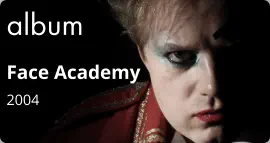
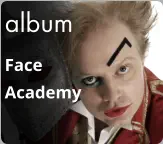
to suspect my career was about to take a nosedive. My Face Academy show hadn't received quite
the same rapturous acclaim as Polaroid Suitcase and I still stood to lose a fair few grand thanks to
the stupendous budget and meagre ticket sales, but in most other respects everything seemed to
be going incredibly well. Over the past year I'd recorded an album, written a TV pilot, performed a
new one man show, done two series of The Day the Music Died on Radio 2, undertaken a small but
well-received national tour and done countless gigs up and down the country. There was no
reason to think the following year would be any different.
There were changes to be made, certainly, but all these things were for the better. My latest show
had been far from perfect - being so busy had eaten into my writing schedule and the final result
was rushed. A year spent working out how to go down well in a stand-up environment made me a
more confident and approachable performer but had removed a lot of the delusional weirdness
that had made the character so distinctive in the first place. I decided therefore to take longer
over the next project - two years rather than the single year I'd spent on the previous two - and to
start saying no to stand-up gigs.
The next major change I wanted to make was to get some better music-making equipment. My
first two albums had been recorded on a PlayStation game and mixed in a film-editing program.
Having gone as far as I could with such a bizarre set-up, it seemed a good time to upscale and get
myself some professional gear. A little research led to a company called Carillon making me a
custom PC, fitted with the latest edition of Cubase and a slew of virtual instruments.
But it wasn't just the PlayStation I wanted to ditch. I also felt like the whole New Romantic parody
thing had run its course. That movement had only lasted a couple of years in the first place - I
didn't want to spend any longer than that making fun of it. Though I still loved Gary Le Strange
and my head was bursting with new ideas for songs he could sing, I realised I'd done just about all
I could in that particular genre. But rather than ditching the character altogether, it seemed a
good opportunity to widen his repertoire, keeping the same electronic sensibilities and the same
ridiculous delusional lyrics but broadening his sphere of influences beyond the music of the early
1980s to encapsulate other styles.
For quite some time, I'd had a framework in mind for Gary's progression from amateur bedroom
weirdo to fully-fledged rock star. In many ways I was retracing my own musical education. I'd
started buying records in 1981 at the age of nine, which is where Polaroid Suitcase had drawn
most of its inspiration. My initial thoughts about the third album concentrated on the mid-80s - I
wanted the smoother, artier stylings of the earlier stuff to give way to something harder-edged,
with big machine drums and sampled guitars, drawing its inspiration more from America than
Europe, just as British pop had done in the 1980s.
More specifically, I became fascinated with Adam Ant's 1985 Vive Le Rock album, with its bizarre
but irresistible blend of USA-tinged punk and glam, its obsession with American pop culture and
call-and-response lyrics. The fact that it had been a commercial flop and led to Adam Ant's
retirement from the mainstream made it even more irresistible as inspiration for Gary's next
move. I'd written a crazy song for The Day the Music Died in 2003 called The Cowboy Astronaut of
Mother's Day, a high-octane blend of Adam Ant's Apollo 9 and David Bowie's Space Oddity, in which
Gary made a desperate hyper-commercial attempt to capture the American market, the Mother's
Day market and the sci-fi nerd market all at the same time. This formed the cornerstone of my
new approach. Before long I had an armful of songs with ridiculous transatlantic names like
Fishnet Brando, Tough Like Rocky and Limey in the Big Apple. Then one day the word "Glamoronica"
magically popped into my head - Gary would describe it as "a forward-thinking blend of
electronica and glam," though really it was just moronic - and I instantly knew it wasn't just a great
name for the new sound. It was the best title I'd ever come up with.
Perhaps if I'd doggedly stuck to that simple idea, things would have turned out differently. But
that wasn't all I wanted to do. After thirty years as a penniless student and general office
dogsbody, my new career as a successful musical comedian gave me carte blanche to catch up on
all that music I'd missed. After devouring the work of the New Romantics and synthpop acts of the
late 70s and early 80s, I moved onto the back catalogue of David Bowie, and from there through
the careers of Roxy Music, Brian Eno, Scott Walker, Nine Inch Nails, Marilyn Manson, The
Stranglers, Kraftwerk, Captain Beefheart - basically anything that took my fancy. I went where the
music took me and it all started blending in my head to form the new songs. Fishnet Brando
started as an Adam Ant pastiche but before long was peppered with references to Bowie, Bolan,
Sigue Sigue Sputnik and Suede. I am a Video blended Duran Duran with Frankie Goes to
Hollywood and Blur. I was no longer concerned with whether anyone "got" all the references or
with slavishly parodying any particular genre. I was only interested in giving Gary his own sound -
even if that sound was nicked from other people.
Gone, too, was my temporal vagueness about when and where Gary fit into the whole scheme of
things. For the past two years I'd consistently told audiences that Gary was a modern pop star, a
present-day never-was rather than a has-been from the early 80s. But in his music I'd tried to
retain the sense that, if you weren't listening properly, you might mistake his songs for the real
thing. Now I wanted to make sure no one mistook him for a thing from the distant past, my new
lyrics making references to Guantanamo Bay, Osama Bin Laden, The X Files, George Alagiah, The
Truman Show and all manner of people and things which didn't exist as cultural reference points
in the 80s. This version of Gary Le Strange would carry him further away from 80s parody and
deeper into the territory of being a proper thing in his own right. Or at least, that was the plan.
With two years to make the next album, I felt able to take my time over the new songs, allowing
the ideas to evolve organically as I worked out how to get the most from my new set-up. Hardly
having had a day off for the past two years, I took it relatively easy for a couple of months, playing
Grand Theft Auto: San Andreas and occasionally mucking around with my new electronic toys.
The debt from the Edinburgh show was a little over four grand - more than I'd expected and not
terribly welcome now I wasn't doing so many paid gigs - but it didn't seem completely
insurmountable if I spread it over time. I did one final Christmas special for The Day the Music
Died, giving me a chance to flex my new Cubase muscles and prove to myself that my investment
hadn't been a mistake. When the producer called me to say he thought Gary Le Strange had gone
as far as he could go on the show, I totally agreed with him and, with the prospect of a BBC-
produced TV pilot coming up, my sudden unemployment didn't seem such a bad thing.
Instead, I concentrated my creative efforts on writing my second TV pilot and hosting a new
monthly comedy club at the Albany on Great Portland Street. Both projects were called Club Le
Strange and both gave me a much greater opportunity to experiment with new formats for Gary,
allowing me to explore his life and background in much greater depth without the need to keep
re-introducing myself over and over again to new audiences. In short, it was a fantastically
creative time, brimming with future possibilities.
And then one day a bomb fell on my life. Early in December 2004, the management company I
was signed to - who had also, sadly, been my producers and promoters in Edinburgh that year - e-
mailed me with the rather distressing news that the company who ran the venue I'd performed at
(The Pod Deco, for all those wanting to put a name to it) was filing for bankruptcy, and that they
were taking every single penny of my ticket money with them. Instead of the four grand I was
expecting to lose, it seemed I would soon be owing my own creditors over three times that
amount. I took legal advice but, given the contract I'd signed, there was no way out of it. And,
given that I'd just lost two of my main jobs and spent my entire life savings on a new computer,
this put me in a very difficult position.
There was always the possibility I could have filed for bankruptcy myself, but that would have
meant losing all my assets and would probably have killed Gary Le Strange stone dead. The only
way forward was to pay it off. But as a non-gigging absurdist character comedian with no steady
income, that wasn't looking too serious an option either. As the only person I knew with any kind
of steady job at all, and therefore the only person I knew who could be trusted to take out a loan,
it fell to my amazing wife Katy to bail me out, leaving me in turn eternally in debt to her. Though
we negotiated a reduction in the amount owed in return for a lump sum payment, it still saddled
us with a five-figure debt which took us another five years to pay off. Needless to say, I left that
management company and signed up with a new theatrical agent early in the new year. It didn't
solve the night terrors, hypertension and encroaching alcoholism but it did mean I could wipe the
slate clean and try to start again.
To say this cast a bit of a pall on things would be an understatement of gargantuan proportions.
My crazy, upbeat, neo-glam masterpiece was suddenly bisected by a huge slab of gloom. Instead
of writing about sci-fi movie legends and transatlantic transvestites, I found myself writing
harrowing dirges about bailiffs, loneliness, delusion and depression. The refrain of Fishnet Brando
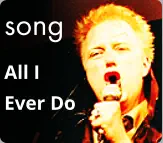
changed from "I am a rebel" to "Give me my money." Though I'd already planned to write a song
called "All I ever do is sit in my room," I wasn't expecting it to end up being so autobiographical, as
my life slowly became a succession of lonely, paranoid days spent largely on my own being poor.
In an effort to drown out the bad voices in my head and convince myself everything was fine (and
to honour the wishes of my chief financial backer, who insisted that I try to finish what I'd started),
I threw myself back into my work. Over the next few months, I wrote and recorded an enormous
amount of instrumental material, providing me with over twenty new potential songs for the
album, among which were some of the boldest and most ambitious tunes I'd ever written. The live
version of Club Le Strange - the one beautiful success story of that year - went from strength to
strength, building a small but dedicated audience over the next few months. This culminated in
the first appearance of Gary's live backing band (consisting of Dan Mersh on guitar, Jeremy Limb
on keyboards and his brother Chris Limb on bass - named The Masques of Mandragora by a
member of the audience). Then, of course, there was my second TV script, which I was convinced
would finally provide Gary with the platform he needed to reach the wider audience he deserved.
The future still looked rosy, for a while.
It didn't last. The TV pilot fell into instant trouble when it turned out the second series of Look
Around You was based on a similar idea, and they had got there first. It fell into even deeper water
when continual staff changes meant I ended up dealing with completely different people from
when I started. Hasty rewrites only served to confuse things and, several joyless drafts later, the
script - by now a garbled compromise - was laid to rest. Though the BBC kindly paid me for my
trouble, a third script went unread and my loose production deal with the corporation shuffled to
a miserable end. The Masques of Mandragora - for one night, a shining beacon of hope that Gary
might transform into a real musician at last - found themselves without a bass player for their
second gig when Chris managed to break his arm. By the time of their third gig, the line-up was
reduced to just Gary and a guitarist, and after that I didn't see much point in bothering. My
grandmother - the last remaining family tie I had to the town where I was born - died in April. The
tube network was attacked by terrorists in July. I spent most nights either blind drunk or unable to
sleep and woke up most mornings (or, increasingly, most afternoons) wanting to maim the people
who'd taken all my wife's money. It wasn't turning out to be a good year.
Then there were the new songs. Though I loved the tunes and was absolutely convinced they
were better than anything I'd ever written before, I became increasingly dispirited about my ability
to write lyrics. A few early ones turned out OK but as the year wore on, I found myself spending
way too much time trying to rewrite the same songs over and over again, yet never managing to
make them funny. My astonishing surfeit of new tunes - which, annoyingly, wouldn't stop coming -
left me overwhelmed, meaning I couldn't settle on a track listing or direct my energies towards a
specific goal. In the rare event that I finally felt happy enough to try one of my new songs out live,
I invariably found it too difficult to sing. Fishnet Brando - intended as my flagship song - was such a
brash cavalcade of belted-out words that it proved too ambitious for a 40-a-day smoker to get his
gob around. Even then, the expectations of a comedy audience are very different to those of a
music audience and, though the songs were really quite mad and undeniably clever, not many of
them contained enough laugh-out-loud marker points to sustain the interest of a live crowd. They
simply weren't as easy to listen to as my earlier songs and, consequently, I found myself yet again
having to face the idea that Gary Le Strange simply wasn't as good as he used to be.
As you might imagine, this wove an immense ball of resentment inside me. At first with the
abstract genre of comedy, for being so bloody restrictive. Everything would have been so much
easier, I thought, if I didn't have to make people laugh. Then, as the year wore on, I became less
enamoured with the tunes too. I was still at the beginning of a steep learning curve with my new
PC software and it would take me many years to build a way of working I was happy with. Even
though, looking back on it, I actually achieved quite a lot in the brief time I'd been working with
Cubase, at the time all I could see was the vast gulf between what I could do and what was
possible for others. Listening to my favourite albums of the year - like Goldfrapp's Supernature,
with its sultry, pristine electronics, or Demon Days by Gorillaz, with its multi-layered kaleidoscope
of ever-changing sonic textures - only served to ram home how far I had to go.
It should have been Gary Le Strange's biggest year. All around us, the culture was showing its
readiness to accept him. All the things I'd been obsessed with two years before, which had
seemed so uncool at the time, were suddenly very cool indeed. Electro rock was everywhere and
it was perfectly acceptable for men to wear eye liner in public. Even my favourite TV programme,
the eternally uncool sci-fi series Doctor Who, had returned from the dead, to become not just a
BAFTA-winning critical success but an absolute ratings smash which every single person in the
country seemed to be head over heels in love with. The prevailing culture was everything I had
fought for it to be. Though it hadn't entirely been his doing, Gary Le Strange had won the Face
War. It should have been the easiest thing for Gary to grab his prize and hoist himself up into the
mainstream.
Maybe that was the problem. My conception of Gary was of a loner, a loser, a fractured mess,
hopelessly out of time - a nightmare version of myself who had no self-awareness and no sense
of humour, doomed to be out of step with popular culture no matter what he did. Though I was
keen to explore all the different possibilities of what he might become, the idea of him embracing
the mainstream obviously didn't appeal to me at that moment in time. Gary no longer had
anything to fight against, and for me, that completely derailed him. When Russell Brand -
previously a jeans and t-shirt act like most other stand-ups - reinvented himself as a surreal,
loquacious dandy in leather trousers and rocketed to worldwide superstardom on the back of it, I
realised Gary's dream job had already been taken, and that from now on, he would simply be
looked at as a second-rate Russell Brand clone.
It was for all these reasons - and probably many more - that I realised it was time to stop being
Gary Le Strange. But I didn't want to stop being him without giving him one last hurrah, without
making a final statement about who he was and what he could have been. The trouble was,
Glamoronica wasn't that statement. I had other, stupider ideas I wanted to try instead and, since
the Glamoronic concept had become such a jumbled albatross, I thought it best to shelve it and
start again. And so, a whole year after I'd begun it, Glamoronica got scrapped.
In the intervening years between then and now, it's often been difficult to get my head around
why I did what I did. Scrapping that album may have released me from a certain set of problems
but it ended up causing a whole lot more, not least of which is the everlasting sense of loss and
shame you get when a cherished project - something so much hope and effort has gone into - has
to die. The fact that the subsequent project was a complete and total career-destroying
commercial failure only compounds this feeling and elicits an infinite stream of "What if" with no
discernible answer. In the end, all you can do is turn your back on the whole thing, chalk it up to
experience and move on.
When the time came to re-release Gary's albums for digital download, I wondered what, if
anything, I might do with the material from Glamoronica. Though I made over twenty backing
tracks and wrote a vast swathe of lyrical material, I only ever recorded two rushed vocals for a
pair of demos in 2006. Over time, my memory tricked me into thinking these were the only two
songs worth worrying about, and I thought I might just stick them on the end of another album as
bonus tracks. But when I looked back at the others I'd written, I realised they weren't all that bad
after all. In fact, some of them were pretty good. At first, I briefly considered completely rewriting
and re-recording some of them for a new album, but over the course of recording even more
demos in the early part of 2013, it became clear that what I needed to do was to place these
songs back into something approaching their proper context.
This new release isn't the album I intended. It's not even an album, really - just a vague collection
of the six songs from the period I didn't think needed rewriting. I haven't altered the backing
tracks at all, these being the very same mixes I made in 2005, nor have the lyrics changed. The
only new element is the vocal, recorded entirely in 2013, but using the same microphone I would
have used, had I recorded it back then. The end result isn't perfect - the original tracks are raw in
places and I'd make them very differently now. But this feels like the right way to release these
songs. What's important to me here isn't necessarily to finish the album - that will never happen -
but to finish at least some of them, so that I can place them back into the chronology where they
might have been, had I not been so messed up at the time.
As for the songs themselves, I still feel fairly mixed about some of them. The opener Fishnet
Brando is an over-compressed, unfunny mess, but it introduces the concept well and sets the tone
for what I set out to do. I only hope anyone listening can stick with it for the other five songs in the
collection, three of which I'd rank among the best I've ever written. More than anything else I'd
done up to this point, my personal life was bleeding through into the lyrics, lending an emotional
honesty to half the songs here, while the others - most especially the manically intense Cowboy
Astronaut of Mother's Day - are chiefly characterised by the kind of desperate flailing of someone
who's terrified his career is about to end, and that's surely worthy of doomed fascination.
If nothing else, this EP serves as a useful bridge between Gary's earlier material and the stuff that
came next. The album that finally killed him off for good.
TO BE CONTINUED...
Waen Shepherd, July 2013
GLAMORONICA: AN INTRODUCTION
Notes for the EP’s digital release, written July 2013








GLAMORONICA
GLAMORONICA: AN INTRODUCTION
Notes for the EP’s digital release,
written July 2013



When I left Edinburgh after my second solo Fringe
run at the end of August 2004, I had no reason to
suspect my career was about to take a nosedive. My
Face Academy show hadn't received quite the same
rapturous acclaim as Polaroid Suitcase and I still
stood to lose a fair few grand thanks to the
stupendous budget and meagre ticket sales, but in
most other respects everything seemed to be going
incredibly well. Over the past year I'd recorded an
album, written a TV pilot, performed a new one
man show, done two series of The Day the Music
Died on Radio 2, undertaken a small but well-
received national tour and done countless gigs up
and down the country. There was no reason to
think the following year would be any different.
There were changes to be made, certainly, but all
these things were for the better. My latest show
had been far from perfect - being so busy had
eaten into my writing schedule and the final result
was rushed. A year spent working out how to go
down well in a stand-up environment made me a
more confident and approachable performer but
had removed a lot of the delusional weirdness that
had made the character so distinctive in the first
place. I decided therefore to take longer over the
next project - two years rather than the single year
I'd spent on the previous two - and to start saying
no to stand-up gigs.
The next major change I wanted to make was to get
some better music-making equipment. My first two
albums had been recorded on a PlayStation game
and mixed in a film-editing program. Having gone
as far as I could with such a bizarre set-up, it
seemed a good time to upscale and get myself
some professional gear. A little research led to a
company called Carillon making me a custom PC,
fitted with the latest edition of Cubase and a slew of
virtual instruments.
But it wasn't just the PlayStation I wanted to ditch. I
also felt like the whole New Romantic parody thing
had run its course. That movement had only lasted
a couple of years in the first place - I didn't want to
spend any longer than that making fun of it.
Though I still loved Gary Le Strange and my head
was bursting with new ideas for songs he could
sing, I realised I'd done just about all I could in that
particular genre. But rather than ditching the
character altogether, it seemed a good opportunity
to widen his repertoire, keeping the same electronic
sensibilities and the same ridiculous delusional
lyrics but broadening his sphere of influences
beyond the music of the early 1980s to encapsulate
other styles.
For quite some time, I'd had a framework in mind
for Gary's progression from amateur bedroom
weirdo to fully-fledged rock star. In many ways I
was retracing my own musical education. I'd started
buying records in 1981 at the age of nine, which is
where Polaroid Suitcase had drawn most of its
inspiration. My initial thoughts about the third
album concentrated on the mid-80s - I wanted the
smoother, artier stylings of the earlier stuff to give
way to something harder-edged, with big machine
drums and sampled guitars, drawing its inspiration
more from America than Europe, just as British pop
had done in the 1980s.
More specifically, I became fascinated with Adam
Ant's 1985 Vive Le Rock album, with its bizarre but
irresistible blend of USA-tinged punk and glam, its
obsession with American pop culture and call-and-
response lyrics. The fact that it had been a
commercial flop and led to Adam Ant's retirement
from the mainstream made it even more irresistible
as inspiration for Gary's next move. I'd written a
crazy song for The Day the Music Died in 2003
called The Cowboy Astronaut of Mother's Day, a high-
octane blend of Adam Ant's Apollo 9 and David
Bowie's Space Oddity, in which Gary made a
desperate hyper-commercial attempt to capture
the American market, the Mother's Day market and
the sci-fi nerd market all at the same time. This
formed the cornerstone of my new approach.
Before long I had an armful of songs with ridiculous
transatlantic names like Fishnet Brando, Tough Like
Rocky and Limey in the Big Apple. Then one day the
word "Glamoronica" magically popped into my
head - Gary would describe it as "a forward-thinking
blend of electronica and glam," though really it was
just moronic - and I instantly knew it wasn't just a
great name for the new sound. It was the best title
I'd ever come up with.
Perhaps if I'd doggedly stuck to that simple idea,
things would have turned out differently. But that
wasn't all I wanted to do. After thirty years as a
penniless student and general office dogsbody, my
new career as a successful musical comedian gave
me carte blanche to catch up on all that music I'd
missed. After devouring the work of the New
Romantics and synthpop acts of the late 70s and
early 80s, I moved onto the back catalogue of David
Bowie, and from there through the careers of Roxy
Music, Brian Eno, Scott Walker, Nine Inch Nails,
Marilyn Manson, The Stranglers, Kraftwerk, Captain
Beefheart - basically anything that took my fancy. I
went where the music took me and it all started
blending in my head to form the new songs. Fishnet
Brando started as an Adam Ant pastiche but before
long was peppered with references to Bowie, Bolan,
Sigue Sigue Sputnik and Suede. I am a Video
blended Duran Duran with Frankie Goes to
Hollywood and Blur. I was no longer concerned with
whether anyone "got" all the references or with
slavishly parodying any particular genre. I was only
interested in giving Gary his own sound - even if
that sound was nicked from other people.
Gone, too, was my temporal vagueness about when
and where Gary fit into the whole scheme of things.
For the past two years I'd consistently told
audiences that Gary was a modern pop star, a
present-day never-was rather than a has-been from
the early 80s. But in his music I'd tried to retain the
sense that, if you weren't listening properly, you
might mistake his songs for the real thing. Now I
wanted to make sure no one mistook him for a
thing from the distant past, my new lyrics making
references to Guantanamo Bay, Osama Bin Laden,
The X Files, George Alagiah, The Truman Show and
all manner of people and things which didn't exist
as cultural reference points in the 80s. This version
of Gary Le Strange would carry him further away
from 80s parody and deeper into the territory of
being a proper thing in his own right. Or at least,
that was the plan.
With two years to make the next album, I felt able
to take my time over the new songs, allowing the
ideas to evolve organically as I worked out how to
get the most from my new set-up. Hardly having
had a day off for the past two years, I took it
relatively easy for a couple of months, playing
Grand Theft Auto: San Andreas and occasionally
mucking around with my new electronic toys.
The debt from the Edinburgh show was a little over
four grand - more than I'd expected and not terribly
welcome now I wasn't doing so many paid gigs - but
it didn't seem completely insurmountable if I
spread it over time. I did one final Christmas special
for The Day the Music Died, giving me a chance to
flex my new Cubase muscles and prove to myself
that my investment hadn't been a mistake. When
the producer called me to say he thought Gary Le
Strange had gone as far as he could go on the
show, I totally agreed with him and, with the
prospect of a BBC-produced TV pilot coming up, my
sudden unemployment didn't seem such a bad
thing.
Instead, I concentrated my creative efforts on
writing my second TV pilot and hosting a new
monthly comedy club at the Albany on Great
Portland Street. Both projects were called Club Le
Strange and both gave me a much greater
opportunity to experiment with new formats for
Gary, allowing me to explore his life and
background in much greater depth without the
need to keep re-introducing myself over and over
again to new audiences. In short, it was a
fantastically creative time, brimming with future
possibilities.
And then one day a bomb fell on my life. Early in
December 2004, the management company I was
signed to - who had also, sadly, been my producers
and promoters in Edinburgh that year - e-mailed
me with the rather distressing news that the
company who ran the venue I'd performed at (The
Pod Deco, for all those wanting to put a name to it)
was filing for bankruptcy, and that they were taking
every single penny of my ticket money with them.
Instead of the four grand I was expecting to lose, it
seemed I would soon be owing my own creditors
over three times that amount. I took legal advice
but, given the contract I'd signed, there was no way
out of it. And, given that I'd just lost two of my main
jobs and spent my entire life savings on a new
computer, this put me in a very difficult position.
There was always the possibility I could have filed
for bankruptcy myself, but that would have meant
losing all my assets and would probably have killed
Gary Le Strange stone dead. The only way forward
was to pay it off. But as a non-gigging absurdist
character comedian with no steady income, that
wasn't looking too serious an option either. As the
only person I knew with any kind of steady job at all,
and therefore the only person I knew who could be
trusted to take out a loan, it fell to my amazing wife
Katy to bail me out, leaving me in turn eternally in
debt to her. Though we negotiated a reduction in
the amount owed in return for a lump sum
payment, it still saddled us with a five-figure debt
which took us another five years to pay off.
Needless to say, I left that management company
and signed up with a new theatrical agent early in
the new year. It didn't solve the night terrors,
hypertension and encroaching alcoholism but it did
mean I could wipe the slate clean and try to start
again.
To say this cast a bit of a pall on things would be an
understatement of gargantuan proportions. My
crazy, upbeat, neo-glam masterpiece was suddenly
bisected by a huge slab of gloom. Instead of writing
about sci-fi movie legends and transatlantic
transvestites, I found myself writing harrowing
dirges about bailiffs, loneliness, delusion and
depression. The refrain of Fishnet Brando changed
from "I am a rebel" to "Give me my money." Though
I'd already planned to write a song called "All I ever
do is sit in my room," I wasn't expecting it to end up
being so autobiographical, as my life slowly became
a succession of lonely, paranoid days spent largely
on my own being poor.
In an effort to drown out the bad voices in my head
and convince myself everything was fine (and to
honour the wishes of my chief financial backer, who
insisted that I try to finish what I'd started), I threw
myself back into my work. Over the next few
months, I wrote and recorded an enormous
amount of instrumental material, providing me with
over twenty new potential songs for the album,
among which were some of the boldest and most
ambitious tunes I'd ever written. The live version of
Club Le Strange - the one beautiful success story of
that year - went from strength to strength, building
a small but dedicated audience over the next few
months. This culminated in the first appearance of
Gary's live backing band (consisting of Dan Mersh
on guitar, Jeremy Limb on keyboards and his
brother Chris Limb on bass - named The Masques
of Mandragora by a member of the audience).
Then, of course, there was my second TV script,
which I was convinced would finally provide Gary
with the platform he needed to reach the wider
audience he deserved. The future still looked rosy,
for a while.
It didn't last. The TV pilot fell into instant trouble
when it turned out the second series of Look Around
You was based on a similar idea, and they had got
there first. It fell into even deeper water when
continual staff changes meant I ended up dealing
with completely different people from when I
started. Hasty rewrites only served to confuse
things and, several joyless drafts later, the script -
by now a garbled compromise - was laid to rest.
Though the BBC kindly paid me for my trouble, a
third script went unread and my loose production
deal with the corporation shuffled to a miserable
end. The Masques of Mandragora - for one night, a
shining beacon of hope that Gary might transform
into a real musician at last - found themselves
without a bass player for their second gig when
Chris managed to break his arm. By the time of
their third gig, the line-up was reduced to just Gary
and a guitarist, and after that I didn't see much
point in bothering. My grandmother - the last
remaining family tie I had to the town where I was
born - died in April. The tube network was attacked
by terrorists in July. I spent most nights either blind
drunk or unable to sleep and woke up most
mornings (or, increasingly, most afternoons)
wanting to maim the people who'd taken all my
wife's money. It wasn't turning out to be a good
year.
Then there were the new songs. Though I loved the
tunes and was absolutely convinced they were
better than anything I'd ever written before, I
became increasingly dispirited about my ability to
write lyrics. A few early ones turned out OK but as
the year wore on, I found myself spending way too
much time trying to rewrite the same songs over
and over again, yet never managing to make them
funny. My astonishing surfeit of new tunes - which,
annoyingly, wouldn't stop coming - left me
overwhelmed, meaning I couldn't settle on a track
listing or direct my energies towards a specific goal.
In the rare event that I finally felt happy enough to
try one of my new songs out live, I invariably found
it too difficult to sing. Fishnet Brando - intended as
my flagship song - was such a brash cavalcade of
belted-out words that it proved too ambitious for a
40-a-day smoker to get his gob around. Even then,
the expectations of a comedy audience are very
different to those of a music audience and, though
the songs were really quite mad and undeniably
clever, not many of them contained enough laugh-
out-loud marker points to sustain the interest of a
live crowd. They simply weren't as easy to listen to
as my earlier songs and, consequently, I found
myself yet again having to face the idea that Gary
Le Strange simply wasn't as good as he used to be.
As you might imagine, this wove an immense ball of
resentment inside me. At first with the abstract
genre of comedy, for being so bloody restrictive.
Everything would have been so much easier, I
thought, if I didn't have to make people laugh. Then,
as the year wore on, I became less enamoured with
the tunes too. I was still at the beginning of a steep
learning curve with my new PC software and it
would take me many years to build a way of
working I was happy with. Even though, looking
back on it, I actually achieved quite a lot in the brief
time I'd been working with Cubase, at the time all I
could see was the vast gulf between what I could do
and what was possible for others. Listening to my
favourite albums of the year - like Goldfrapp's
Supernature, with its sultry, pristine electronics, or
Demon Days by Gorillaz, with its multi-layered
kaleidoscope of ever-changing sonic textures - only
served to ram home how far I had to go.
It should have been Gary Le Strange's biggest year.
All around us, the culture was showing its readiness
to accept him. All the things I'd been obsessed with
two years before, which had seemed so uncool at
the time, were suddenly very cool indeed. Electro
rock was everywhere and it was perfectly
acceptable for men to wear eye liner in public. Even
my favourite TV programme, the eternally uncool
sci-fi series Doctor Who, had returned from the
dead, to become not just a BAFTA-winning critical
success but an absolute ratings smash which every
single person in the country seemed to be head
over heels in love with. The prevailing culture was
everything I had fought for it to be. Though it hadn't
entirely been his doing, Gary Le Strange had won
the Face War. It should have been the easiest thing
for Gary to grab his prize and hoist himself up into
the mainstream.
Maybe that was the problem. My conception of
Gary was of a loner, a loser, a fractured mess,
hopelessly out of time - a nightmare version of
myself who had no self-awareness and no sense of
humour, doomed to be out of step with popular
culture no matter what he did. Though I was keen
to explore all the different possibilities of what he
might become, the idea of him embracing the
mainstream obviously didn't appeal to me at that
moment in time. Gary no longer had anything to
fight against, and for me, that completely derailed
him. When Russell Brand - previously a jeans and t-
shirt act like most other stand-ups - reinvented
himself as a surreal, loquacious dandy in leather
trousers and rocketed to worldwide superstardom
on the back of it, I realised Gary's dream job had
already been taken, and that from now on, he
would simply be looked at as a second-rate Russell
Brand clone.
It was for all these reasons - and probably many
more - that I realised it was time to stop being Gary
Le Strange. But I didn't want to stop being him
without giving him one last hurrah, without making
a final statement about who he was and what he
could have been. The trouble was, Glamoronica
wasn't that statement. I had other, stupider ideas I
wanted to try instead and, since the Glamoronic
concept had become such a jumbled albatross, I
thought it best to shelve it and start again. And so, a
whole year after I'd begun it, Glamoronica got
scrapped.
In the intervening years between then and now, it's
often been difficult to get my head around why I did
what I did. Scrapping that album may have released
me from a certain set of problems but it ended up
causing a whole lot more, not least of which is the
everlasting sense of loss and shame you get when a
cherished project - something so much hope and
effort has gone into - has to die. The fact that the
subsequent project was a complete and total
career-destroying commercial failure only
compounds this feeling and elicits an infinite
stream of "What if" with no discernible answer. In
the end, all you can do is turn your back on the
whole thing, chalk it up to experience and move on.
When the time came to re-release Gary's albums
for digital download, I wondered what, if anything, I
might do with the material from Glamoronica.
Though I made over twenty backing tracks and
wrote a vast swathe of lyrical material, I only ever
recorded two rushed vocals for a pair of demos in
2006. Over time, my memory tricked me into
thinking these were the only two songs worth
worrying about, and I thought I might just stick
them on the end of another album as bonus tracks.
But when I looked back at the others I'd written, I
realised they weren't all that bad after all. In fact,
some of them were pretty good. At first, I briefly
considered completely rewriting and re-recording
some of them for a new album, but over the course
of recording even more demos in the early part of
2013, it became clear that what I needed to do was
to place these songs back into something
approaching their proper context.
This new release isn't the album I intended. It's not
even an album, really - just a vague collection of the
six songs from the period I didn't think needed
rewriting. I haven't altered the backing tracks at all,
these being the very same mixes I made in 2005,
nor have the lyrics changed. The only new element
is the vocal, recorded entirely in 2013, but using the
same microphone I would have used, had I
recorded it back then. The end result isn't perfect -
the original tracks are raw in places and I'd make
them very differently now. But this feels like the
right way to release these songs. What's important
to me here isn't necessarily to finish the album -
that will never happen - but to finish at least some
of them, so that I can place them back into the
chronology where they might have been, had I not
been so messed up at the time.
As for the songs themselves, I still feel fairly mixed
about some of them. The opener Fishnet Brando is
an over-compressed, unfunny mess, but it
introduces the concept well and sets the tone for
what I set out to do. I only hope anyone listening
can stick with it for the other five songs in the
collection, three of which I'd rank among the best
I've ever written. More than anything else I'd done
up to this point, my personal life was bleeding
through into the lyrics, lending an emotional
honesty to half the songs here, while the others -
most especially the manically intense Cowboy
Astronaut of Mother's Day - are chiefly characterised
by the kind of desperate flailing of someone who's
terrified his career is about to end, and that's surely
worthy of doomed fascination.
If nothing else, this EP serves as a useful bridge
between Gary's earlier material and the stuff that
came next. The album that finally killed him off for
good.
TO BE CONTINUED...
Waen Shepherd, July 2013