BEEF SCARECROW



1.
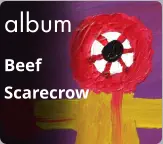
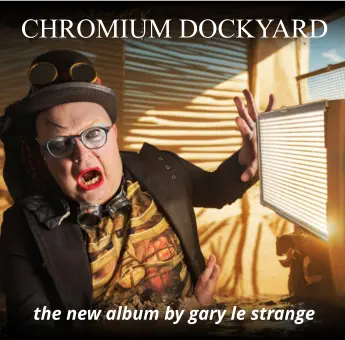
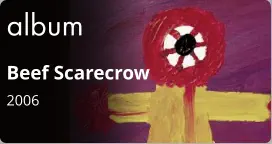
Beef Scarecrow is an album by Gary Le Strange.
2.
Originally his fourth, but when the third fell through (see the album notes for the mini-album
Glamoronica for several pages of reasons why), it became the third. But now the third one
sort of semi-exists, it can become the fourth again. Or still the third if you don't think mini-
albums count.
3.
Unlike the previous three (or two, or two and a half), this album can in no way be described as
anything approaching "eighties parody" or "New Romantic pastiche". In fact, it's anything but,
its most obvious feature being the complete absence of anything even remotely related to the
1980s or the New Romantic movement.
4.
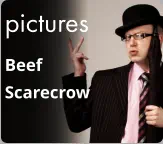
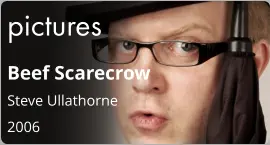
Instead, we get a genre-busting mash-up of psychedelia, glam rock, prog, folk, jazz, blues and
Britpop, a bizarre and often disturbing cycle of offbeat songs about rotting scarecrows, evil
pipers, violent whelks, genetically re-engineered wolves, imaginary cartoon swan Gods and
bowler hats with bees on, showcasing influences as diverse as The Beatles, The Beach Boys,
Roxy Music, Scott Walker, King Crimson, Kate Bush, The Rolling Stones, Pink Floyd, Radiohead,
The Doors, T-Rex and Blur.
5.
But why?
6.
Well, why not?
7.
The main reason why not is that I had, apparently, stumbled upon an everlasting cash cow in
the form of my musically comedic alter ego, the New Romantic superstar Gary Le Strange, and
that to reject the very thing that made him commercially attractive would be career suicide.
Surely no one would be that stupid?
8.
But if you've read the album notes for the mini-album Glamoronica, you'll know that wasn't
the case. After three years and several rather unfortunate financial events, it was becoming
apparent that my act was costing me more than I earned. And, once the initial wave of
interest had died down and the job offers started falling away, it looked like the party was
over. Spending several months unable to finish a satisfactory set of lyrics for my latest set of
songs only reinforced the idea that I should pack up Gary's plastic trousers and call it a day.
9.
But I had one last thing I wanted to try. Something I'd been itching to do ever since I thought
of him. I knew the 80s revival fad wasn't going to last forever. I knew I could only write so
many songs about broken robots and lipstick-clad pop warriors before the whole thing just
seemed like a pale rehash of itself. And I thought, wouldn't it be great to take that same
character and do something else with him? To change his image completely, write songs in a
completely different style, just like real pop stars do. It would be just like coming up with a
new character, but better because I'd be able to keep the bits I liked and evolve a character as
I went along instead of having to start all over again. Wow, character development for comedy
characters! Could it possibly work?
10.
The result was a creative explosion to a degree I'd never experienced before. Every aspect of
my act got a complete overhaul, as I spewed forth a non-stop torrent of stupid ideas,
unfiltered by reason. Instead of imposing a predetermined theme and structure on it from the
start, I decided to loosen up and just let it happen, see what came out of it. And what came
out of it was Beef Scarecrow.
11.
I knew it would be disappointing to some. Most especially to fans of a particular type of
electronic music which isn't represented here. One might be forgiven in fact for thinking I'd
abandoned electronic music altogether in favour of more traditional rock instrumentation,
and on the one hand this is true. This is much more a rock album than a pop album, and it
does feature the sound of real guitars, real basses and real drums.
12.
But in reality, this album is completely electronic. The only organically played instrument,
apart from the voice, is a harmonica (which is just used as a texture for a few seconds in Dawn
of the Maggots). The rest is all synthesisers and samples. Since I can't actually play any
instruments in real life (including the harmonica, which will be strikingly obvious if you find it),
the whole thing is built from the ground up, note by note, beat by beat, on a digital audio
workstation called Cubase, which, at that time, I'd only been using for a year. While my
previous work as Gary Le Strange had stuck quite rigidly to the same sonic template, these
new songs required a much richer, more eclectic sonic palette. So it's probably no surprise
that it took about nine months of solid, weekend-and-evening-destroying work to finish it.
13.
To list every single piece of software I used might take forever, but the main ones were, in no
particular order:
- Spectrasonics' Atmosphere (for the synths)
- Spectrasonics' Trilogy (for the bass)
- a wonderful (but now sadly obsolete) rhythm guitar program by Steinberg called Virtual
Guitarist
- an electric guitar sample library by Vienna Instruments called Overdrive (enabled by
Steinberg's HALion sampler)
- a German sound effects library called Studio Box
- East West's Quantum Leap Symphonic Orchestra (Silver Edition, the cheapest)
- and the drums, which are all carefully cut-up and remixed audio loops played on a then-
revolutionary, state-of-the-art percussion program by Spectrasonics called Stylus RMX
14.
With a new sound, I needed a new look. Out went the make-up, frilly shirts and plastic
trousers. In came a pinstripe suit, bought from a tailor on Regent Street, and a pair of thick-
rimmed designer specs (fake copies off the internet). There was something about it which
covered all the bases, reminding me simultaneously of Patrick Macnee in The Avengers, Max
Normal in Judge Dredd, Blur in the publicity photos for The Great Escape, David Tennant's (then
brand new) interpretation of The Doctor from Doctor Who (who, it has to be said, sounded
uncommonly like Gary Le Strange) and, most importantly, Robert Fripp in the 1980s version of
King Crimson - perched on a stool smiling in a suit and glasses, never had a rock guitarist
looked so anti-rock. And after three years cavorting around in make-up and fetish gear,
nothing said "bizarre psychedelic outsider" like a pinstripe business suit and glasses.
15.
And bizarre psychedelic outsiders who can't see properly are what it's all about. Not that I
planned it, but unlike most of the songs on my previous albums, these songs aren't
particularly about Gary Le Strange. Each one is in fact a snapshot or portrait of someone else -
sometimes in the first person, sometimes in the third - each one weirder than the last: the
Kidney Piper, who summons the local children to work in his mine by playing cool sounds on
his meat pipe; the Midnight Bastard, who clumps around your flat making chicken noises in
an orthopaedic shoe; or Rodney Normal, who combs his teeth clean, fries a cup of tea and
drives to work on a flag. These are all misfits in a world of nonsense, illogical idiots who don't
fit into either this world or the warped world they're supposed to inhabit.
16.
You might ask then: is this really Gary Le Strange? If he doesn't look or sound like him and he
doesn't sing about himself, how can you say it's the same guy? And I suppose the answer to
that is, it depends on who you think Gary Le Strange really is. If you think he's a two-
dimensional comedy character who sounds a bit like a cross between Gary Numan and David
Sylvian and sings silly songs about broken robots and sentient toasters, then it probably isn't.
But if you think he's the pop star alter ego of the comic character actor and offbeat comedy
songwriter Waen Shepherd, then it definitely is.
17.
Either way, the live show - and after all, this album was only supposed to be a promotional
accompaniment to the live show - was totally Gary Le Strange. But having found my first two
shows too linear (the first was a character monologue detailing his personal history and the
second was a philosophical stand-up show exploring his feelings about the modern world), I
was determined to make this one more dynamic. So instead of constructing it as a
straightforward argument going from A to B, I wondered what show Gary might actually like
to inflict on his audience. And it struck me he would try to provide a total artistic experience -
not just music and philosophy but also poetry, painting, creative writing, mime - whatever he
put his mind to. So I wrote a bad political poem from the viewpoint of an angry cow, painted a
self-portrait for the first time since I was eight years old and wrote a desperately terrible,
thinly autobiographical children's story called Gary Potter and the Swan of Flame, all of which
made it into the live show.
18.
But that wasn't enough. I wanted to mess with the whole structure of what a Gary Le Strange
show was supposed to be. I'd already done everything I was supposed to do, several years in
a row, and last time it had led to a show I found too safe for comfort. Now I wanted to do
everything I wasn't supposed to do. Little alienation techniques I'd learned along the years, like
dashing in through the side entrance at the top of the show apologizing for being late, rather
than bounding onto the stage with a booming fanfare. Spending five minutes introducing and
explaining the show before even singing a note. I even allowed the character to calmly boast
about how his new album was "the greatest music ever made" and stop the show halfway
through to have his lunch.
19.
But still that wasn't enough. As the show took shape, and I realised this version of Gary Le
Strange was a fully-fledged psychedelic nutcase, I knew I had to include a piece of music with
extraordinary ambitions. A mini-musical perhaps, like Keith West's Excerpt from a Teenage
Opera, maybe a pocket symphony like The Beach Boys' Good Vibrations. But since most of the
songs I wrote these days turned out to be little mini-musicals and pocket symphonies, I
needed something even bigger and weirder: a haphazard collection of bizarre childlike
passages and interludes perhaps, like Brian Wilson's Smile; a frightening collision of harrowing
emotions, like the later work of Scott Walker; maybe a concept suite of linked ideas like Kate
Bush's work on Hounds of Love and Aerial; or maybe just a huge, epic barrage of random
statements and sound effects like The Beatles' Revolution Nine. Would I dare? Could I do it?
And, more to the point, would anyone have the patience to listen to it if I did?
20.
At first, it was a story. Originally, I had a song called Meat Jesus, about a man who saw the face
of God in a sausage and carried it round forever afterwards as a keepsake. Then I listened to a
song called The Scarecrow on Pink Floyd's first album and was reminded I'd once written
alternate lyrics to it at the age of 15 about a naughty scarecrow who sets fire to a village and
ends up being thrown in the sea by bent coppers. After which I realised that scarecrows look
like the crucified Jesus and that Scarecrow Messiah might make a wonderfully pretentious
album title. After Googling it and realising it was already taken, it wasn't much of a leap to slap
it together with Meat Jesus and find Beef Scarecrow. Then, after listening to a self-titled album
by a pair called McDonald & Giles, the second side of which is a 20-minute epic about an
inventor from Walthamstow who tries to invent a flying machine (note to reader: at the time, I
too lived in Walthamstow), I thought about Icarus flying to the sun, and realised that, if his
wings were made of raw meat instead of wax, pretty soon, instead of melting, they would
cook. So what if I wrote a story about a scarecrow made of raw meat, who is so sick of
standing in this awful field in this horrible village full of idiots that he decides to fly to the sun,
and in the process cooks to death? A tragedy for him, yes, but what a beautiful feast for all the
villagers below.
21.
And what a startling image of metamorphosis. I hate to critically analyse my own work, but no
one else is going to do it, so here goes. Part of the theory behind the randomness was that
eventually, this tree full of monkeys would produce the works of Shakespeare. Or rather, the
more seemingly random rubbish I wrote, the more underlying truth it would display and the
more meaningful it would become. And sure enough, in many ways the album and the show
began to write themselves, as repeated imagery of day and night cycles, death and rebirth,
the corruption of innocence, seasonal changes and metamorphosis of all different kinds
began to unfold before me and show me what the album was all about.
22.
Working titles included Myxomatoxic, Pork Pyramid, Gorgon Jesus, Lord of the Floating Brains,
Corridors of Beef, Lt Col Atherton's Fascinating Kidney Emporium, The 13 Gimmicks of Doctor
Normolicus and my personal favourite (which I very nearly went with until my wife sensibly
vetoed it), Swirling Purple Tripe. But in the end, the scarecrow made of raw meat, stuck in a
field like a sacrificial Christ, knowing he will go off if he stays where he is but afraid to fly away
in case he cooks and turns into a meal, summed up my own predicament perfectly. Needing
to change but terrified of what other people might do to me if I tried. Or rather, a certain
knowledge that once I jumped out of the frying pan I was in, there was only one other place I
could end up.
23.
Naturally, in this spirit of randomness, the ideas didn't stay still for long. Eventually, if there's a
deadline, you have to get a grip and impose a structure on what you've got. The scarecrow
thing naturally shrank into a much more compact acoustic folk tune (regretfully losing the
meat-cooking image in the process) and it was another idea - about a little boy hallucinating
the end of the world after an acid trip and transforming into an all-powerful God - that formed
the basis of the album's central song suite.
24.
But the serious tone remained. The show, at first a disparate bunch of performance pieces,
coalesced into an illustration of a man going through a nervous breakdown, deluded into
thinking he was ascending to the next plane of greatness when in fact he was descending into
madness and destitution. The album, at first a haphazard bunch of random outbursts, was
now an unbroken cycle of songs that all ran into each other through several days and nights,
tracing the steps of a deluded innocent through various levels of corruption and right back to
deluded innocence again.
25.
Naturally, once I realised how bloody serious it actually all was, it worried me half to death. All
my instincts told me that, when comedians start flirting with being serious, the only
reasonable expectation is public humiliation. But the wheels were already in motion - I had
the venue booked, the Fringe programme paid for, all the music written. Not to mention that
to have dropped out of two cherished projects in a row would have absolutely devastated me
and ensured I never finished an artistic project of any kind ever again. I needed to finish this
for the sake of my sanity and future happiness. And, when I travelled up to Edinburgh in
August 2006 for what would turn out to be my last ever full-length Gary Le Strange show, I
genuinely thought I had not only the best show and the best set of songs, but the best
creative project I had ever been involved in.
26.
Naturally, it was a total disaster. Not that I expected everyone to like it - Gary Le Strange had
always been a bit Marmite and I knew the new approach would alienate some - but this was in
another league. Scathing reviews, walk-outs every day, vitriolic message boards and general
confusion over why the Hell I would take such an apparently well-loved comedy character and
destroy him like this. It wasn't so much the music people objected to - though the Maggots
suite came in for a bit of stick from the people it was designed to annoy - but the show itself.
One of the main complaints was that it was more a piece of theatre than a comedy show,
though I could never see why it wasn't allowed to be both. Another controversy centred
around Gary eating a tin of cat food - a moment designed as a quick visual hint that he'd fallen
on seriously hard times - which I thought would elicit sympathy but usually provoked disgust.
Maybe, as one critic put it, they actually thought I was eating real cat food rather than a
cleverly disguised prop? Whatever the truth, after a year's work on what was clearly the most
sophisticated show I'd done yet, it was deeply demoralizing and seriously not fun.
27.
The worst thing, for me - in an unfortunate turn of events that can only have happened by
invoking the wrath of the God of Random Chance - was the revelation that I wasn't the first
man to think up a scarecrow made of beef. I'd barely been in Edinburgh five minutes before
people started accusing me of having nicked it from Robert Popper's 2003 book The
Timewaster Letters. Not having read it, I had no idea what they were on about, but fortunately I
already knew Robert, having worked with him several years previously on an animation for
Channel 4. So I asked him about this scarecrow thing and it turned out yes, there was indeed
an incidental detail in the book about a scarecrow made of beef. Naturally he was very
gracious about it and said he knew that pilfering other people's ideas was the last thing I'd do.
But that didn't stop me getting a particularly mean-spirited review from a well-known comedy
website virtually accusing me of serial plagiarism. I wouldn't have minded but I'd Googled it
and everything. Shame on me for not reading every book in the world too.
28.
Then again, some people utterly adored it. One woman came so many times we had to start
letting her in for free. Other comedians were all monumentally supportive and for every
disgruntled walk-out there was someone coming up to me to rave about it. And the fact that
some people hated it so much looked, to some, like a triumph. When one critic moaned that
"if you want to hear someone sing the word 'maggot' over 30 times in repetition, then see this
show. If not, see anything else," Josie Long (who won the if.com Newcomer Award that year)
told me that made it sound like the best show on the Fringe. The best moment came when my
wife Katy forced me to look at an internet forum (now sadly deleted) on which people were
giving me either 5-star or 0-star ratings. The ones who hated it were having a great time
calling it the worst drivel they'd ever seen in their lives, while the ones who loved it were
revelling in having to explain to the others in great detail what it was about, all the tiny details
they hadn't spotted in the show which might have made a difference. Beautifully reassuring to
see it hadn't all been in vain and that I wasn't just confusing people unnecessarily. But the
best post of all was from one disbelieving punter who simply said, "Waen - stop giving yourself
so many five star reviews!"
29.
Gary didn't die straight away. I started writing new songs almost immediately (for an album
tentatively called Gary Normal) but I slowly realised they were even more esoteric than the last
lot and, when the Edinburgh figures came in and we found ourselves saddled with many more
thousands of pounds of debt, we knew it would be an expensive waste of time to carry on. I
made a few videos of my earlier songs with Stewart Lee for an ITV show called Comedy Cuts,
which almost inspired a massive relaunch for the character. But by then it was 2007, five years
after I'd started, and it felt too big a step backwards. I tried to compromise by forcing him to
go through a Goth phase and wrote a couple of songs for a potential album called Darkest
Hits, but my heart wasn't in it. At the end of 2007, nearly six years after I'd first stepped out on
stage and sang Sex Dummy at Barcode, I finally realised that Gary Le Strange had run his
course and formally declared him dead.
30.
Besides, there were other things I needed to do: new stage acts, new musical explorations, to
work again with other people instead of locked away in a room on my own. As my stage work
died down, I had the great fortune to be offered much more work in TV and radio, slowly
amassing a far longer CV under my own name, not just as a comic actor but also as a
songwriter and composer. None of these things would have been possible without Gary Le
Strange, nor would they have happened if I'd carried on being him. When the CDs eventually
ran out, I didn't bother re-releasing them, thinking no one was particularly interested any
more and, over time, people forgot about Gary. Finally, I was able to slink back into the
shadows, where no one would have a go at me for eating cat food and singing about maggots.
31.
Looking back, I wasn't sure how I'd feel about Beef Scarecrow. After a while, it became difficult
to separate the album from the show and that depressing month on the Fringe. Hindsight is a
bastard and often tricks you into focusing on what could have been, instead of what actually
was. I came to see his last album as the black sheep of the family, the evil cousin no one talks
about, an expensive mistake which had destroyed my reputation and murdered Gary Le
Strange. I rarely ever wanted to listen to it and, if I tried, it would invariably make me feel
uncomfortable and consumed with regret.
32.
More recently, I was surprised to find that some people think it's his best. It turns out there
are people out there who still listen to it frequently, and others who don't give a monkey's
about Gary's earlier, New Romantic material but really do like this one. Secret Wolf and Michael
the Swan are regularly quoted back to me as all-time favourites, and the Maggots suite - so
derided and hated by some - became an annual staple at the Latitude Festival for a while,
each year ever more people joining me on stage for the climactic chorus. Performing it with a
30-piece orchestra (conducted by the brilliant Martin White) at the Queen Elizabeth Hall on
the South Bank is still one of the greatest stage experiences of my life.
33.
Going back to the album after seven years, I felt I needed to correct a few things. The original
mixes had been rushed to meet a summer deadline and the final masters were a little too
muddy for my taste. I also realised that the voice was mixed a little too low on some songs
and the words might be lost if you didn't have a lyric sheet to hand. So I went back to the
master files and remastered (well, technically, remixed) all of the tracks, both to improve the
clarity of the vocal line and to brighten the overall sound, without losing any of the original
warmth. What emerged for me is an album that I'm now intensely proud of, a multi-faceted,
multi-layered labyrinth which sounds like nothing else, rewards repeated listening and makes
me marvel at how I found the time (and the balls) to attempt it. Now the only regrets I have
are that I didn't realise this sooner, and that I didn't immediately follow it up with an even
weirder one.
34.
Whether or not it's really Gary Le Strange is up to you. But I've reconciled myself wiith it now.
And to my mind, it's the best thing he ever did.
35.
Still, he could have done with a happier ending though, don't you think?
259. THE END
260. TO BE CONTINUED...?
259 THINGS YOU PROBABLY WISH YOU NEVER KNEW ABOUT
'BEEF SCARECROW' (abridged)
Notes for the album’s digital release, written November 2013











BEEF SCARECROW

259 THINGS YOU PROBABLY WISH YOU
NEVER KNEW ABOUT ‘BEEF SCARECROW’
Notes for the album’s digital release,
written December 2013
1.
Beef Scarecrow is an album by Gary Le Strange.
2.
Originally his fourth, but when the third fell
through (see the album notes for the mini-album
Glamoronica for several pages of reasons why), it
became the third. But now the third one sort of
semi-exists, it can become the fourth again. Or
still the third if you don't think mini-albums
count.
3.
Unlike the previous three (or two, or two and a
half), this album can in no way be described as
anything approaching "eighties parody" or "New
Romantic pastiche". In fact, it's anything but, its
most obvious feature being the complete
absence of anything even remotely related to the
1980s or the New Romantic movement.
4.
Instead, we get a genre-busting mash-up of
psychedelia, glam rock, prog, folk, jazz, blues and
Britpop, a bizarre and often disturbing cycle of
offbeat songs about rotting scarecrows, evil
pipers, violent whelks, genetically re-engineered
wolves, imaginary cartoon swan Gods and bowler
hats with bees on, showcasing influences as
diverse as The Beatles, The Beach Boys, Roxy
Music, Scott Walker, King Crimson, Kate Bush, The
Rolling Stones, Pink Floyd, Radiohead, The Doors,
T-Rex and Blur.
5.
But why?
6.
Well, why not?
7.
The main reason why not is that I had,
apparently, stumbled upon an everlasting cash
cow in the form of my musically comedic alter
ego, the New Romantic superstar Gary Le
Strange, and that to reject the very thing that
made him commercially attractive would be
career suicide. Surely no one would be that
stupid?
8.
But if you've read the album notes for the mini-
album Glamoronica, you'll know that wasn't the
case. After three years and several rather
unfortunate financial events, it was becoming
apparent that my act was costing me more than I
earned. And, once the initial wave of interest had
died down and the job offers started falling away,
it looked like the party was over. Spending
several months unable to finish a satisfactory set
of lyrics for my latest set of songs only reinforced
the idea that I should pack up Gary's plastic
trousers and call it a day.
9.
But I had one last thing I wanted to try.
Something I'd been itching to do ever since I
thought of him. I knew the 80s revival fad wasn't
going to last forever. I knew I could only write so
many songs about broken robots and lipstick-
clad pop warriors before the whole thing just
seemed like a pale rehash of itself. And I thought,
wouldn't it be great to take that same character
and do something else with him? To change his
image completely, write songs in a completely
different style, just like real pop stars do. It would
be just like coming up with a new character, but
better because I'd be able to keep the bits I liked
and evolve a character as I went along instead of
having to start all over again. Wow, character
development for comedy characters! Could it
possibly work?
10.
The result was a creative explosion to a degree I'd
never experienced before. Every aspect of my act
got a complete overhaul, as I spewed forth a non-
stop torrent of stupid ideas, unfiltered by reason.
Instead of imposing a predetermined theme and
structure on it from the start, I decided to loosen
up and just let it happen, see what came out of it.
And what came out of it was Beef Scarecrow.
11.
I knew it would be disappointing to some. Most
especially to fans of a particular type of electronic
music which isn't represented here. One might be
forgiven in fact for thinking I'd abandoned
electronic music altogether in favour of more
traditional rock instrumentation, and on the one
hand this is true. This is much more a rock album
than a pop album, and it does feature the sound
of real guitars, real basses and real drums.
12.
But in reality, this album is completely electronic.
The only organically played instrument, apart
from the voice, is a harmonica (which is just used
as a texture for a few seconds in Dawn of the
Maggots). The rest is all synthesisers and samples.
Since I can't actually play any instruments in real
life (including the harmonica, which will be
strikingly obvious if you find it), the whole thing is
built from the ground up, note by note, beat by
beat, on a digital audio workstation called Cubase,
which, at that time, I'd only been using for a year.
While my previous work as Gary Le Strange had
stuck quite rigidly to the same sonic template,
these new songs required a much richer, more
eclectic sonic palette. So it's probably no surprise
that it took about nine months of solid, weekend-
and-evening-destroying work to finish it.
13.
To list every single piece of software I used might
take forever, but the main ones were, in no
particular order:
- Spectrasonics' Atmosphere (for the synths)
- Spectrasonics' Trilogy (for the bass)
- a wonderful (but now sadly obsolete) rhythm
guitar program by Steinberg called Virtual
Guitarist
- an electric guitar sample library by Vienna
Instruments called Overdrive (enabled by
Steinberg's HALion sampler)
- a German sound effects library called Studio
Box
- East West's Quantum Leap Symphonic
Orchestra (Silver Edition, the cheapest)
- and the drums, which are all carefully cut-up
and remixed audio loops played on a then-
revolutionary, state-of-the-art percussion
program by Spectrasonics called Stylus RMX
14.
With a new sound, I needed a new look. Out went
the make-up, frilly shirts and plastic trousers. In
came a pinstripe suit, bought from a tailor on
Regent Street, and a pair of thick-rimmed
designer specs (fake copies off the internet).
There was something about it which covered all
the bases, reminding me simultaneously of
Patrick Macnee in The Avengers, Max Normal in
Judge Dredd, Blur in the publicity photos for The
Great Escape, David Tennant's (then brand new)
interpretation of The Doctor from Doctor Who
(who, it has to be said, sounded uncommonly like
Gary Le Strange) and, most importantly, Robert
Fripp in the 1980s version of King Crimson -
perched on a stool smiling in a suit and glasses,
never had a rock guitarist looked so anti-rock.
And after three years cavorting around in make-
up and fetish gear, nothing said "bizarre
psychedelic outsider" like a pinstripe business
suit and glasses.
15.
And bizarre psychedelic outsiders who can't see
properly are what it's all about. Not that I planned
it, but unlike most of the songs on my previous
albums, these songs aren't particularly about
Gary Le Strange. Each one is in fact a snapshot or
portrait of someone else - sometimes in the first
person, sometimes in the third - each one
weirder than the last: the Kidney Piper, who
summons the local children to work in his mine
by playing cool sounds on his meat pipe; the
Midnight Bastard, who clumps around your flat
making chicken noises in an orthopaedic shoe; or
Rodney Normal, who combs his teeth clean, fries
a cup of tea and drives to work on a flag. These
are all misfits in a world of nonsense, illogical
idiots who don't fit into either this world or the
warped world they're supposed to inhabit.
16.
You might ask then: is this really Gary Le Strange?
If he doesn't look or sound like him and he
doesn't sing about himself, how can you say it's
the same guy? And I suppose the answer to that
is, it depends on who you think Gary Le Strange
really is. If you think he's a two-dimensional
comedy character who sounds a bit like a cross
between Gary Numan and David Sylvian and
sings silly songs about broken robots and
sentient toasters, then it probably isn't. But if you
think he's the pop star alter ego of the comic
character actor and offbeat comedy songwriter
Waen Shepherd, then it definitely is.
17.
Either way, the live show - and after all, this
album was only supposed to be a promotional
accompaniment to the live show - was totally
Gary Le Strange. But having found my first two
shows too linear (the first was a character
monologue detailing his personal history and the
second was a philosophical stand-up show
exploring his feelings about the modern world), I
was determined to make this one more dynamic.
So instead of constructing it as a straightforward
argument going from A to B, I wondered what
show Gary might actually like to inflict on his
audience. And it struck me he would try to
provide a total artistic experience - not just music
and philosophy but also poetry, painting, creative
writing, mime - whatever he put his mind to. So I
wrote a bad political poem from the viewpoint of
an angry cow, painted a self-portrait for the first
time since I was eight years old and wrote a
desperately terrible, thinly autobiographical
children's story called Gary Potter and the Swan of
Flame, all of which made it into the live show.
18.
But that wasn't enough. I wanted to mess with
the whole structure of what a Gary Le Strange
show was supposed to be. I'd already done
everything I was supposed to do, several years in
a row, and last time it had led to a show I found
too safe for comfort. Now I wanted to do
everything I wasn't supposed to do. Little
alienation techniques I'd learned along the years,
like dashing in through the side entrance at the
top of the show apologizing for being late, rather
than bounding onto the stage with a booming
fanfare. Spending five minutes introducing and
explaining the show before even singing a note. I
even allowed the character to calmly boast about
how his new album was "the greatest music ever
made" and stop the show halfway through to
have his lunch.
19.
But still that wasn't enough. As the show took
shape, and I realised this version of Gary Le
Strange was a fully-fledged psychedelic nutcase, I
knew I had to include a piece of music with
extraordinary ambitions. A mini-musical perhaps,
like Keith West's Excerpt from a Teenage Opera,
maybe a pocket symphony like The Beach Boys'
Good Vibrations. But since most of the songs I
wrote these days turned out to be little mini-
musicals and pocket symphonies, I needed
something even bigger and weirder: a haphazard
collection of bizarre childlike passages and
interludes perhaps, like Brian Wilson's Smile; a
frightening collision of harrowing emotions, like
the later work of Scott Walker; maybe a concept
suite of linked ideas like Kate Bush's work on
Hounds of Love and Aerial; or maybe just a huge,
epic barrage of random statements and sound
effects like The Beatles' Revolution Nine. Would I
dare? Could I do it? And, more to the point, would
anyone have the patience to listen to it if I did?
20.
At first, it was a story. Originally, I had a song
called Meat Jesus, about a man who saw the face
of God in a sausage and carried it round forever
afterwards as a keepsake. Then I listened to a
song called The Scarecrow on Pink Floyd's first
album and was reminded I'd once written
alternate lyrics to it at the age of 15 about a
naughty scarecrow who sets fire to a village and
ends up being thrown in the sea by bent coppers.
After which I realised that scarecrows look like
the crucified Jesus and that Scarecrow Messiah
might make a wonderfully pretentious album
title. After Googling it and realising it was already
taken, it wasn't much of a leap to slap it together
with Meat Jesus and find Beef Scarecrow. Then,
after listening to a self-titled album by a pair
called McDonald & Giles, the second side of which
is a 20-minute epic about an inventor from
Walthamstow who tries to invent a flying machine
(note to reader: at the time, I too lived in
Walthamstow), I thought about Icarus flying to
the sun, and realised that, if his wings were made
of raw meat instead of wax, pretty soon, instead
of melting, they would cook. So what if I wrote a
story about a scarecrow made of raw meat, who
is so sick of standing in this awful field in this
horrible village full of idiots that he decides to fly
to the sun, and in the process cooks to death? A
tragedy for him, yes, but what a beautiful feast
for all the villagers below.
21.
And what a startling image of metamorphosis. I
hate to critically analyse my own work, but no
one else is going to do it, so here goes. Part of the
theory behind the randomness was that
eventually, this tree full of monkeys would
produce the works of Shakespeare. Or rather, the
more seemingly random rubbish I wrote, the
more underlying truth it would display and the
more meaningful it would become. And sure
enough, in many ways the album and the show
began to write themselves, as repeated imagery
of day and night cycles, death and rebirth, the
corruption of innocence, seasonal changes and
metamorphosis of all different kinds began to
unfold before me and show me what the album
was all about.
22.
Working titles included Myxomatoxic, Pork
Pyramid, Gorgon Jesus, Lord of the Floating Brains,
Corridors of Beef, Lt Col Atherton's Fascinating
Kidney Emporium, The 13 Gimmicks of Doctor
Normolicus and my personal favourite (which I
very nearly went with until my wife sensibly
vetoed it), Swirling Purple Tripe. But in the end, the
scarecrow made of raw meat, stuck in a field like
a sacrificial Christ, knowing he will go off if he
stays where he is but afraid to fly away in case he
cooks and turns into a meal, summed up my own
predicament perfectly. Needing to change but
terrified of what other people might do to me if I
tried. Or rather, a certain knowledge that once I
jumped out of the frying pan I was in, there was
only one other place I could end up.
23.
Naturally, in this spirit of randomness, the ideas
didn't stay still for long. Eventually, if there's a
deadline, you have to get a grip and impose a
structure on what you've got. The scarecrow
thing naturally shrank into a much more compact
acoustic folk tune (regretfully losing the meat-
cooking image in the process) and it was another
idea - about a little boy hallucinating the end of
the world after an acid trip and transforming into
an all-powerful God - that formed the basis of the
album's central song suite.
24.
But the serious tone remained. The show, at first
a disparate bunch of performance pieces,
coalesced into an illustration of a man going
through a nervous breakdown, deluded into
thinking he was ascending to the next plane of
greatness when in fact he was descending into
madness and destitution. The album, at first a
haphazard bunch of random outbursts, was now
an unbroken cycle of songs that all ran into each
other through several days and nights, tracing
the steps of a deluded innocent through various
levels of corruption and right back to deluded
innocence again.
25.
Naturally, once I realised how bloody serious it
actually all was, it worried me half to death. All
my instincts told me that, when comedians start
flirting with being serious, the only reasonable
expectation is public humiliation. But the wheels
were already in motion - I had the venue booked,
the Fringe programme paid for, all the music
written. Not to mention that to have dropped out
of two cherished projects in a row would have
absolutely devastated me and ensured I never
finished an artistic project of any kind ever again.
I needed to finish this for the sake of my sanity
and future happiness. And, when I travelled up to
Edinburgh in August 2006 for what would turn
out to be my last ever full-length Gary Le Strange
show, I genuinely thought I had not only the best
show and the best set of songs, but the best
creative project I had ever been involved in.
26.
Naturally, it was a total disaster. Not that I
expected everyone to like it - Gary Le Strange had
always been a bit Marmite and I knew the new
approach would alienate some - but this was in
another league. Scathing reviews, walk-outs every
day, vitriolic message boards and general
confusion over why the Hell I would take such an
apparently well-loved comedy character and
destroy him like this. It wasn't so much the music
people objected to - though the Maggots suite
came in for a bit of stick from the people it was
designed to annoy - but the show itself. One of
the main complaints was that it was more a piece
of theatre than a comedy show, though I could
never see why it wasn't allowed to be both.
Another controversy centred around Gary eating
a tin of cat food - a moment designed as a quick
visual hint that he'd fallen on seriously hard times
- which I thought would elicit sympathy but
usually provoked disgust. Maybe, as one critic put
it, they actually thought I was eating real cat food
rather than a cleverly disguised prop? Whatever
the truth, after a year's work on what was clearly
the most sophisticated show I'd done yet, it was
deeply demoralizing and seriously not fun.
27.
The worst thing, for me - in an unfortunate turn
of events that can only have happened by
invoking the wrath of the God of Random Chance
- was the revelation that I wasn't the first man to
think up a scarecrow made of beef. I'd barely
been in Edinburgh five minutes before people
started accusing me of having nicked it from
Robert Popper's 2003 book The Timewaster
Letters. Not having read it, I had no idea what they
were on about, but fortunately I already knew
Robert, having worked with him several years
previously on an animation for Channel 4. So I
asked him about this scarecrow thing and it
turned out yes, there was indeed an incidental
detail in the book about a scarecrow made of
beef. Naturally he was very gracious about it and
said he knew that pilfering other people's ideas
was the last thing I'd do. But that didn't stop me
getting a particularly mean-spirited review from a
well-known comedy website virtually accusing me
of serial plagiarism. I wouldn't have minded but
I'd Googled it and everything. Shame on me for
not reading every book in the world too.
28.
Then again, some people utterly adored it. One
woman came so many times we had to start
letting her in for free. Other comedians were all
monumentally supportive and for every
disgruntled walk-out there was someone coming
up to me to rave about it. And the fact that some
people hated it so much looked, to some, like a
triumph. When one critic moaned that "if you
want to hear someone sing the word 'maggot'
over 30 times in repetition, then see this show. If
not, see anything else," Josie Long (who won the
if.com Newcomer Award that year) told me that
made it sound like the best show on the Fringe.
The best moment came when my wife Katy
forced me to look at an internet forum (now sadly
deleted) on which people were giving me either
5-star or 0-star ratings. The ones who hated it
were having a great time calling it the worst drivel
they'd ever seen in their lives, while the ones who
loved it were revelling in having to explain to the
others in great detail what it was about, all the
tiny details they hadn't spotted in the show which
might have made a difference. Beautifully
reassuring to see it hadn't all been in vain and
that I wasn't just confusing people unnecessarily.
But the best post of all was from one disbelieving
punter who simply said, "Waen - stop giving
yourself so many five star reviews!"
29.
Gary didn't die straight away. I started writing
new songs almost immediately (for an album
tentatively called Gary Normal) but I slowly
realised they were even more esoteric than the
last lot and, when the Edinburgh figures came in
and we found ourselves saddled with many more
thousands of pounds of debt, we knew it would
be an expensive waste of time to carry on. I made
a few videos of my earlier songs with Stewart Lee
for an ITV show called Comedy Cuts, which almost
inspired a massive relaunch for the character. But
by then it was 2007, five years after I'd started,
and it felt too big a step backwards. I tried to
compromise by forcing him to go through a Goth
phase and wrote a couple of songs for a potential
album called Darkest Hits, but my heart wasn't in
it. At the end of 2007, nearly six years after I'd
first stepped out on stage and sang Sex Dummy at
Barcode, I finally realised that Gary Le Strange
had run his course and formally declared him
dead.
30.
Besides, there were other things I needed to do:
new stage acts, new musical explorations, to
work again with other people instead of locked
away in a room on my own. As my stage work
died down, I had the great fortune to be offered
much more work in TV and radio, slowly
amassing a far longer CV under my own name,
not just as a comic actor but also as a songwriter
and composer. None of these things would have
been possible without Gary Le Strange, nor would
they have happened if I'd carried on being him.
When the CDs eventually ran out, I didn't bother
re-releasing them, thinking no one was
particularly interested any more and, over time,
people forgot about Gary. Finally, I was able to
slink back into the shadows, where no one would
have a go at me for eating cat food and singing
about maggots.
31.
Looking back, I wasn't sure how I'd feel about
Beef Scarecrow. After a while, it became difficult to
separate the album from the show and that
depressing month on the Fringe. Hindsight is a
bastard and often tricks you into focusing on
what could have been, instead of what actually
was. I came to see his last album as the black
sheep of the family, the evil cousin no one talks
about, an expensive mistake which had
destroyed my reputation and murdered Gary Le
Strange. I rarely ever wanted to listen to it and, if I
tried, it would invariably make me feel
uncomfortable and consumed with regret.
32.
More recently, I was surprised to find that some
people think it's his best. It turns out there are
people out there who still listen to it frequently,
and others who don't give a monkey's about
Gary's earlier, New Romantic material but really
do like this one. Secret Wolf and Michael the Swan
are regularly quoted back to me as all-time
favourites, and the Maggots suite - so derided
and hated by some - became an annual staple at
the Latitude Festival for a while, each year ever
more people joining me on stage for the climactic
chorus. Performing it with a 30-piece orchestra
(conducted by the brilliant Martin White) at the
Queen Elizabeth Hall on the South Bank is still
one of the greatest stage experiences of my life.
33.
Going back to the album after seven years, I felt I
needed to correct a few things. The original mixes
had been rushed to meet a summer deadline and
the final masters were a little too muddy for my
taste. I also realised that the voice was mixed a
little too low on some songs and the words might
be lost if you didn't have a lyric sheet to hand. So
I went back to the master files and remastered
(well, technically, remixed) all of the tracks, both
to improve the clarity of the vocal line and to
brighten the overall sound, without losing any of
the original warmth. What emerged for me is an
album that I'm now intensely proud of, a multi-
faceted, multi-layered labyrinth which sounds like
nothing else, rewards repeated listening and
makes me marvel at how I found the time (and
the balls) to attempt it. Now the only regrets I
have are that I didn't realise this sooner, and that
I didn't immediately follow it up with an even
weirder one.
34.
Whether or not it's really Gary Le Strange is up to
you. But I've reconciled myself wiith it now. And
to my mind, it's the best thing he ever did.
35.
Still, he could have done with a happier ending
though, don't you think?
259. THE END
260. TO BE CONTINUED...?